


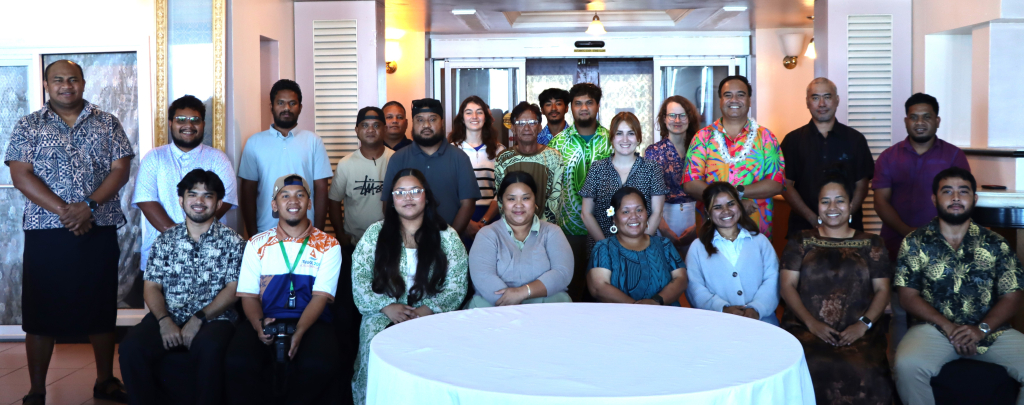
20 March 2026, Majuro, Republic of the Marshall Islands – How do we put a cost on our identity, health and wellbeing? The question was put forth many times by participants at the Marshall Islands Building our Loss and Damage (BOLD) Response Project Inception workshop in Majuro.
The survival and maintenance of traditional knowledge is under existential threat as sea levels rise and islands become uninhabitable. In the Marshall Islands, the sea has been rising by an average of 7mm every year since 1993, more than double the global average due to wind patterns. This has exacerbated the loss of generational burial and cultural grounds, traditional navigation and fishing practices, language and the traditional use of medicinal plants. Rising migration means the transfer of traditional knowledge to the next generation in the Marshall Islands is happening less frequently.
These are examples of Non-economic Loss and Damage (NELD), which are climate impacts that are not easily quantified, especially in financial terms.
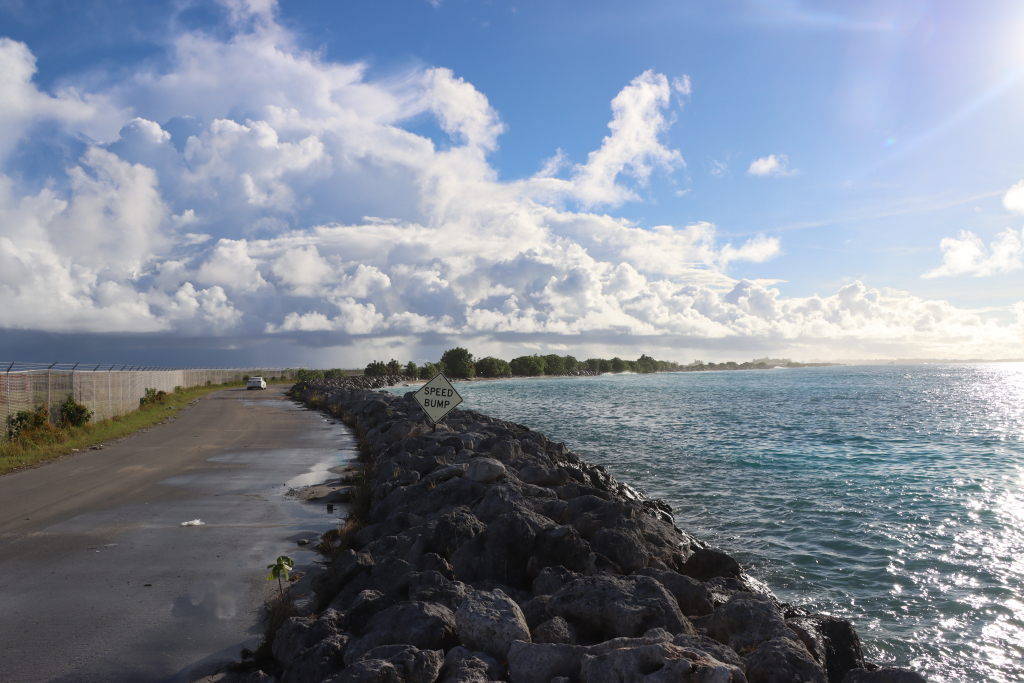
At the workshop, they were highlighted by participants as losses that are at the very core of what makes the Marshallese people who they are, but they are slowly fading from the place they call home. This prompted discussion about whether placing an economic value on something a community views as priceless and whether doing so may diminish its cultural and traditional significance.
NELD was a core part of the workshop, identifying national needs and existing efforts to address loss and damage.
A key stakeholder in this work, Jo-Jikum which means ‘your home’ in Marshallese, is a youth-led non-profit organisation that focuses on creating community-based programs to empower Marshallese youth. They provide training in media, arts, and project management in relation to climate change and other environmental programs.
The group has undertaken several initiatives that respond to the impacts of climate change in the Marshall Islands including sharing traditional knowledge. They have carried out the installation of legendary kiosks where significant and important Marshallese legends took place. The kiosks have served as hubs for community engagement, awareness raising and transfer of knowledge.
Additionally, a partnership between the group and the Marshall Islands Public School Service under the UNDP Ridge to Reef project has seen the development of a Marshallese Language Arts booklet containing traditional legends and chants form Aur Atoll.
An important component under the work was Jo-Jikum youth travelling to the outer islands to collect the stories, a geographically challenging endeavour as outer atolls can be days travel away and costly.
Despite this, Jo-Jikum Deputy Director Mr Konea Ishimura spoke to the exercise bridging an important gap in ensuring this traditional knowledge is collected and documented. The resulting booklet now stands as a resource with the potential to be integrated into the national curriculum, a step that would further strengthen the transfer of knowledge to the next generation.
Mr Ishimura also spoke about the challenges in collecting stories and experiences of climate change impact. With many being central to loss, the topic is often emotionally heavy, and discussions must be done so in a manner of deep respect and care.
“A trauma-informed approach must be taken to collect any house-to-house data and safeguarding traditional knowledge”, he said.
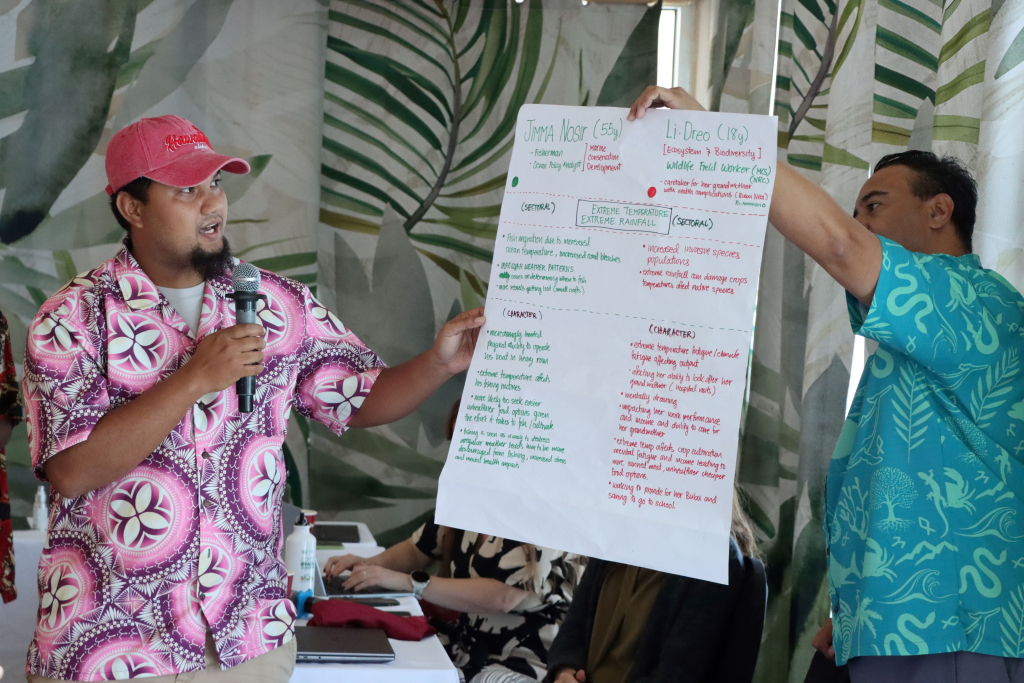
Workshop participants also called for loss and damage experiences, specifically loss of land and impact on mental health to be central in the development of a NELD assessment framework.
“NELD is a relatively new concept in the Pacific and owing to this is a key gap relating to the dominance of utilising an economic lens when assessing climate change-induced impacts in the region”, says BOLD Project Manager Mr Malaki Iakopo.
“A specific work package under the BOLD project is dedicated to further understanding and assessment of NELD in the project countries, and support community pilot projects to address NELD, and will build on existing loss and damage work and in alignment with national priorities”.
The BOLD loss and damage work is also structured inter-connectively around the other project priority packages in science, strengthening national policy and access to finance.
Prioritisation of NELD is critical to ensure the survival and transfer or traditional knowledge in the Marshall Islands. Like many other Pacific islands, for Marshall Islands communities the mental health toll of watching their land diminish because of climate change impact, year by year, is a burden no economic indicator can fully capture.
The Building our Loss and Damage (BOLD) Response Project is a five-year project running from 2025 to December 2029 and is funded by the Federal Republic of Germany through its Federal Foreign Office, under the International Climate Initiative (IKI). The Republic of Marshall Islands BOLD Inception Workshop was held in Majuro from 17 – 19 March 2026.
BOLD is implemented by a consortium led by the Secretariat of the Pacific Regional Environment Programme (SPREP) and Climate Analytics, across five Pacific Island countries Fiji, the Republic of the Marshall Islands, Samoa, Tuvalu, and Vanuatu.
For more information on the BOLD Response Project, please contact SPREP Climate Change Adaptation Adviser, Filomena Nelson, filomenan@sprep.org , BOLD Project Manager, Malaki Iakopo, malakii@sprep.org or Climate Analytics – Patrick Pringle patrick.pringle@climateanalytics.org