


1 May 2026, Honiara - Invasive species remain the leading driver of biodiversity loss in the Pacific, undermining ecosystem resilience and limiting the ability of communities to adapt to climate change.
To confront this challenge, conservation rangers from Guadalcanal, Malaita, Western, and Rennell provinces gathered at the Barana Community Nature and Heritage Park in Honiara for a Rangers Knowledge Exchange and Learning Programme.
This initiative was led by the Government of the Solomon Islands through the Ministry of Environment, Climate Change, Disaster Management and Meteorology and its Environment and Conservation Division (ECD).
Supported by the Secretariat of the Pacific Regional Environment Programme (SPREP) led Pacific Regional Invasive Species Management Support Service (PRISMSS) Resilient Ecosystems, Resilient Communities (RERC) programme, the learning exchange provided a platform for collaboration, practical training and coordinated action to strengthen invasive species management across the Solomon Islands in a sustainable way.
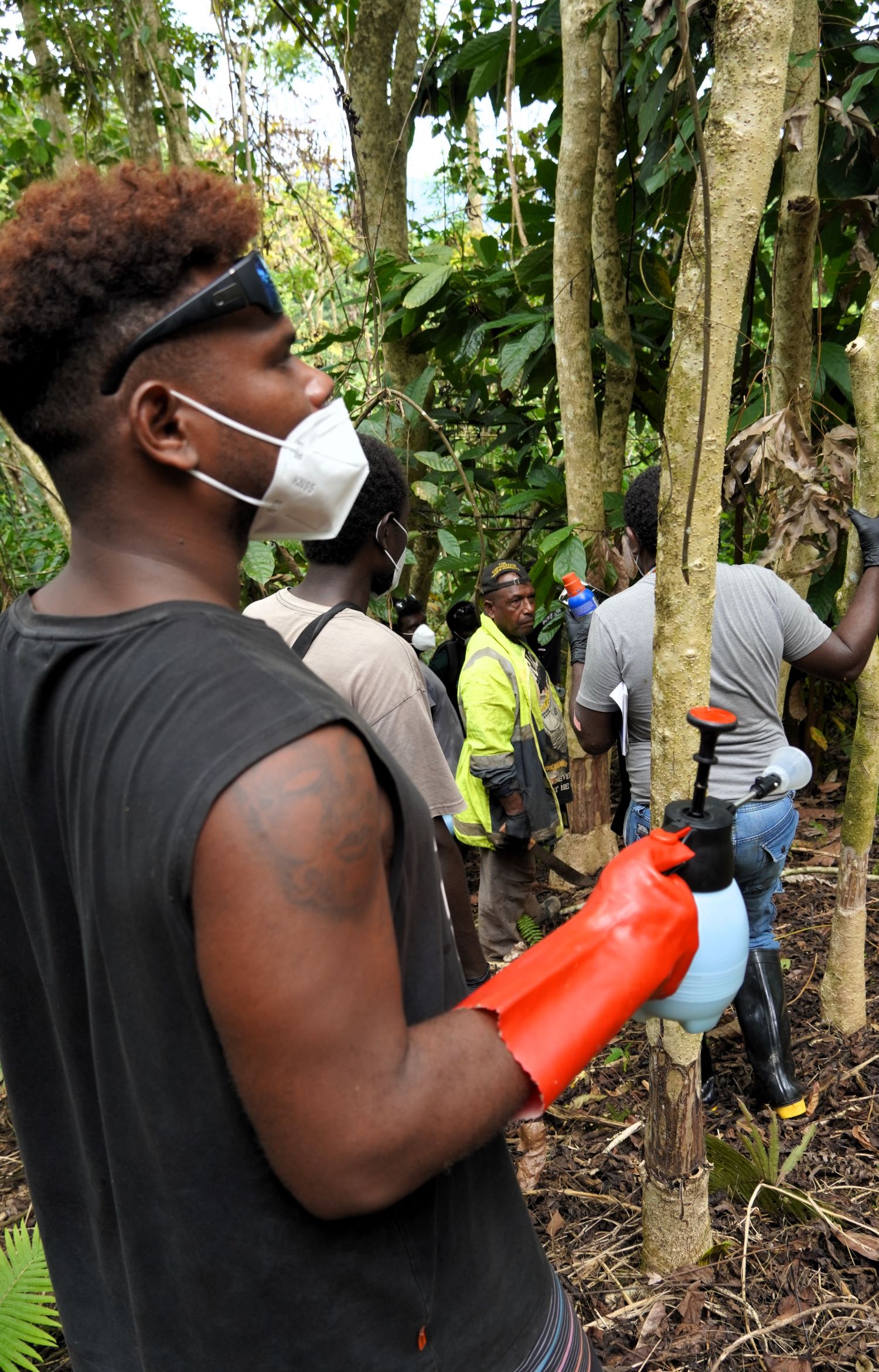
The exchange equipped rangers with skills in safe and effective weed management and site-based restoration. BirdLife International, as co-technical lead of the PRISMSS RERC programme, contributed expertise on predator control of managing rats, feral pigs, and cats, that pose significant threats to biodiversity and food security.
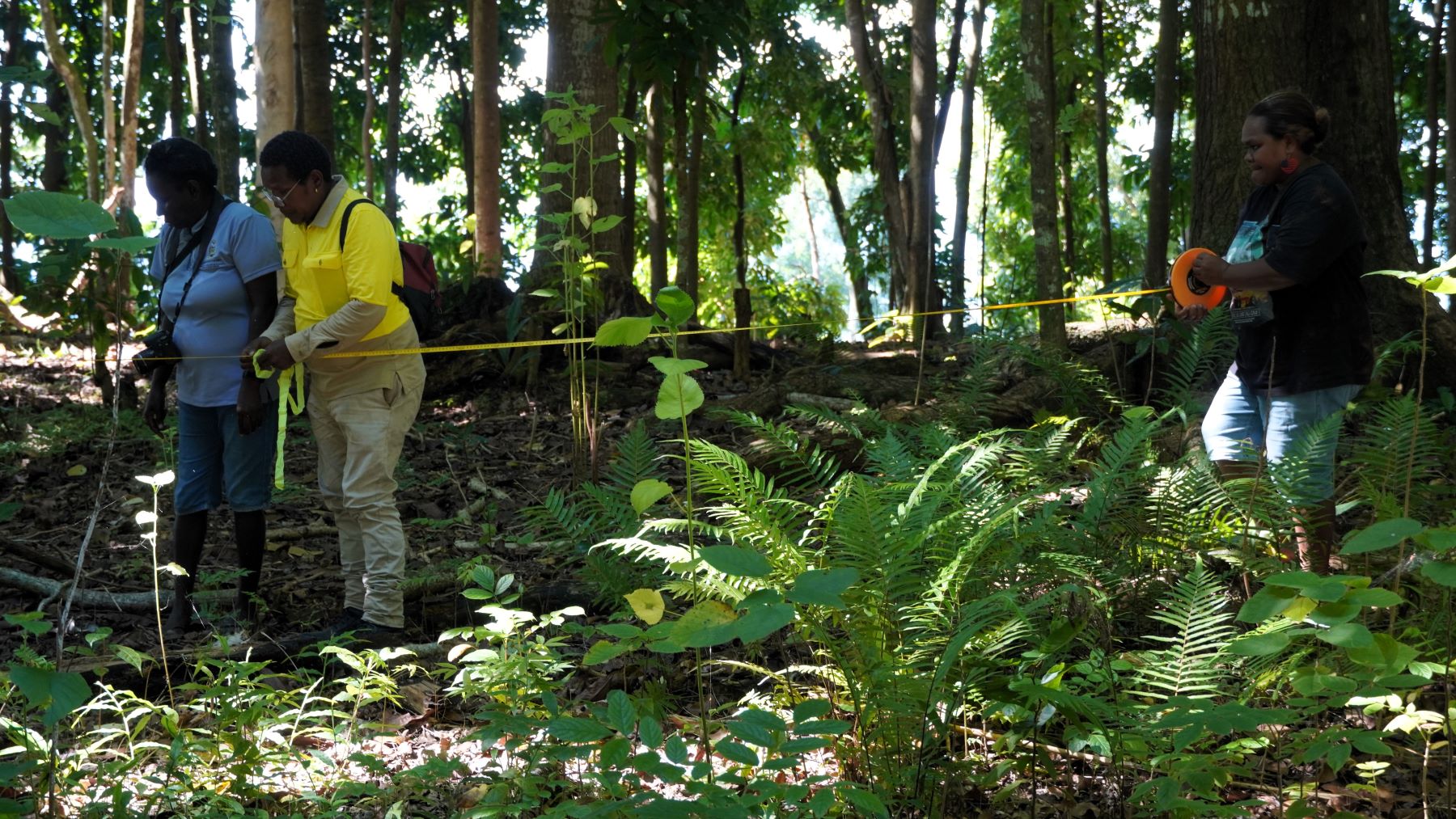
The PRISMSS RERC programme in an identified Barana community conservation area has already shown how community rangers can lead the fight against invasive species. A community capacity building programme was undertaken at the Barana conservation site by the PRISMSS RERC programme in 2025, where the community were provided with tools, resources and trained on how to properly use them to manage invasive weeds within identified management zones.
The Barana community showcased its own progress, demonstrating how tools, training, and community-led approaches have reduced invasive weeds within identified management zones since 2025 and how it could be replicated in other provinces. The exchange programme engaged rangers from across various provinces in knowledge sharing sessions and enabled hands on weed and predator management training while learning and using safe herbicide use and application methods.
Through hands-on exercises, rangers developed site-specific action plans to address invasive species in affordable and sustainable ways, while reinforcing the importance of inclusivity, traditional knowledge and community ownership.
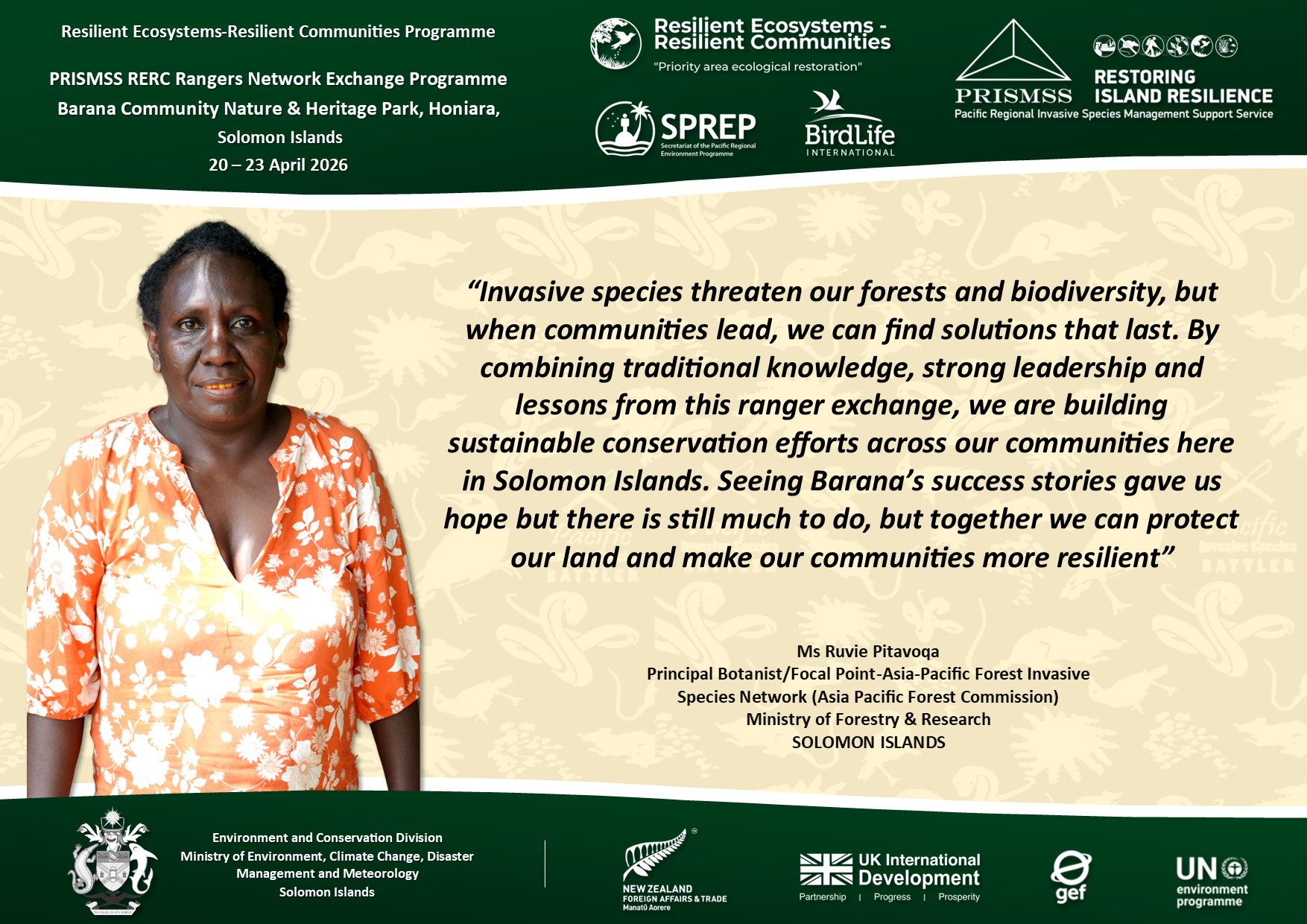
Mr Jerry Mane, Park Coordinator of the Barana Community Nature & Heritage Park in Honiara said: “We are grateful to the PRISMSS RERC programme for its support and thanks to this partnership we are already seeing positive results within the management zones at the Barana Community Conservation Area.
“The rangers knowledge exchange enabled us to showcase our success stories and share practical experience in invasive species management with rangers from provinces across the Solomon Islands.”
“By promoting these community led approaches and encouraging replication across the isles, we can scale up local action and strengthen national resilience.”
Mr Laneck Piziki, a ranger from the Kolombanara Island Biodiversity Conservation Association (KIBCA), Western Province shared that, “this exchange reinforced that resilience is built when science and tradition work together.”
“Inclusive decision-making and local practices are the backbone of long-term biodiversity conservation and building resilient islands and communities and what inspired me most was seeing how Barana community uses safe, targeted, affordable and sustainable practices to manage invasive species.”
“These are methods we can realistically apply in our own communities without needing huge budgets."
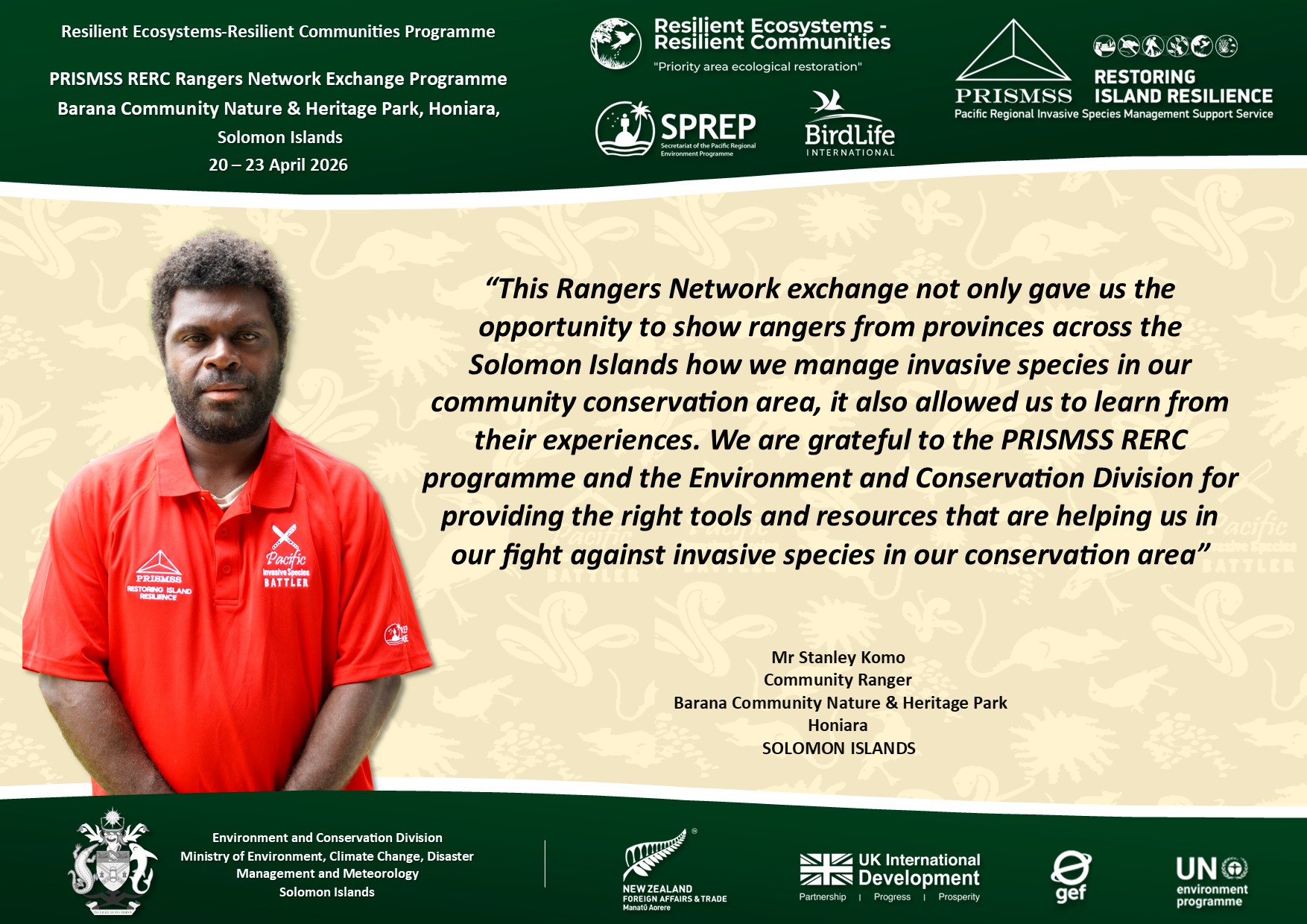
A ranger with the Ensuring Resilient Ecosystems & Protected Areas (EREPA), Mr Sabino Mele from the Kakabona Community Guadalcanal Province, reflected that “inclusivity is key and at Barana, everyone, from elders to youth was involved in managing invasive species.”
“That level of community ownership is something we want to replicate in our provinces, and I also realised that invasive species management is about protecting culture.”
“Our heritage, traditions and way of life depend on healthy ecosystems, and this training reinforced that connection. Knowledge shared here is like seeds. We will plant these lessons in our provinces, nurture them with community involvement and watch resilience grow across our Solomon Islands.”
A community ranger for the Ono Tribal Land Conservation, Mr Samson Gravin Wa’arimae from the Malaita Province reflected that, “I am thankful that I was able to attend this rangers exchange programme and agree that managing invasives is not a one-time effort but a lifelong commitment.”
“The practical exercise of setting up management zones for invasive weed management and predator control gave us confidence. It showed us that we can take immediate, targeted steps to protect our ecosystems once we return to our provinces and this mindset will guide us as we plan long-term strategies for our own conservation areas.”
Mr Geroge Tauika, ranger for Lake Tengano World Heritage Site, Renell Province shared, “this exchange showed us the power of collaboration. With the shared experiences and learnings across provinces and the knowledge gained from this training we can build resilient ecosystems and resilient communities across Solomon Islands together.”
“The Barana community showed us that coordinated and properly structured ongoing invasive species management is the only way to protect native species and keep our ecosystems healthy.”
A Senior Conservation Officer with ECD, Mr Melvin Zama, shared that, “our ancestors taught us to read the land, and blending that wisdom with modern techniques gives communities ownership of invasive species management solutions.”
“Traditional and cultural practices are powerful tools against invasive species when everyone is included. The knowledge shared over these four days of the Rangers Exchange will help us work more closely with communities across the provinces as we move together toward a more resilient Solomon Islands.”
Assistant Chair Lady of the Barana Community Nature & Heritage Park, Ms Alice Buko, reflected that, “invasive species management must be inclusive and here in Barana, women actively lead forest conservation efforts, and our youth bring energy and new ideas and together they strengthen resilience and sustainability.”
“When our communities, government, ranger networks and stakeholders work as one, sharing resources, training and traditional knowledge, we create affordable, long-term solutions through community owned monitoring, locally appropriate predator control and sustainable restoration.”
The PRISMSS RERC programme has produced a Pacific Invasive Species Battler series titled Build Resilient Ecosystems and Communities by Managing Invasive Species in High-Priority Sites (https://brb.sprep.org/content/build-resilient-ecosystems-and-communities-managing-invasive-species-high-priority-sites), which supports environmental conservation, led by communities on site-based efforts, to restore ecosystems and manage invasive species.
SPREP Invasive Species Adviser, Mr David Moverley shared that, “the process of ecological restoration provides an objective approach to increase the resilience of species, ecosystems and communities through the protection of natural assets which assist in the adaptation to the impacts of climate change.”
“A site-led approach to manage multiple invasive species and re-introduce lost native species and ecosystem structure over a longer period of time is the last remaining option to restore and maintain these ecosystems.”
“Site-based action can be used to control multiple invasive species to support the natural regenerative processes of native ecosystem structure and function, and our communities directly benefit from resilient ecosystems and are an essential part of ecological restoration as site-based management aligns well with traditional Pacific land ownership practices.”
The PRISMSS RERC programme, funded by the New Zealand Ministry of Foreign Affairs and Trade and the United Kingdom International Development, has completed rangers’ network and learning exchange programmes in Vanuatu and Solomon Islands with a scheduled programme upcoming for the Federated States of Micronesia and more planned within the region in later 2026.
About PRISMSS: The Pacific Regional Invasive Species Management Support Service (PRISMSS) is a service designed to facilitate the scaling up of operational management of invasive species in the Pacific. PRISMSS brings together experts to provide support within the Pacific region with a focus on protection of indigenous biodiversity and ecosystem function. As a service provider, PRISMSS provides a comprehensive suite of support services in a cohesive, effective, efficient, and accessible manner to Pacific Island countries and territories.
Restoring Island Resilience (RIR): The PRISMSS - Restoring Island Resilience (RIR) is a New Zealand-PRISMSS collaboration project that aims to improve Pacific Island Countries and territories livelihoods and resilience to climate change by reducing the impact of invasive species on natural and agricultural ecosystems through the six PRISMSS programmes.
PRISMSS Powered by: New Zealand Foreign Affairs & Trade, United Kingdom International Development, GEF, United Nations Environment Programme & SPREP.
PRISMSS Partners: Bioeconomy Science Institute NZ, Birdlife International, Earth Sciences New Zealand, New Zealand Department of Conservation, Island Conservation, the Pacific Community and SPREP.
PRISMSS Programmes: Protect Our Islands (POI), Predator Free Pacific (PFP), War on Weeds (WOW), Natural Enemies Natural Solutions (NENS), Resilient Ecosystems Resilient Communities (RERC) and Protect Our Marine Areas (POMA).
For additional information please contact Mr Dominic Sadler, PRISMSS Manager on dominics@sprep.org or Mr Nitish Narayan, PRISMSS Communications & Liaison Officer on nitishn@sprep.org