


Growing an awareness of Climate Change Loss and Damage is at the forefront of community workshops held across the four states of the Federated States of Micronesia in March.
Through the Loss and Damage Capacity and Capability Project funded by the Government of New Zealand and implemented by the Secretariat of the Pacific Regional Environment Programme (SPREP), work has been undertaken in partnership with the FSM Department of Environment, Climate Change and Emergency Management.
Loss and Damage is a climate change impact determined when actions to stop or slow climate change haven’t been addressed, and adaptation activities have reached their limit and no longer work resulting in a loss of service or benefit that has built the foundation of resilience, livelihoods or the way of life.
“Our Pacific islands region contributes to less than 0.03% of the world’s total greenhouse gas emissions but we are amongst the most vulnerable to the impacts of climate change,” said Ms Filomena Nelson, the Climate Change Adaptation and Loss and Damage Adviser for SPREP.
“In spite of this our Pacific is showing leadership with both their adaptation and mitigation actions at all levels. We are always learning, now we are learning about Loss and Damage and how it is impacting our people, and the spirit of action is strong – we are still being asked, what and how can we address this?”
All Pacific Islands have their own unique circumstances alike the FSM whereby Loss and Damage experiences vary State to State.
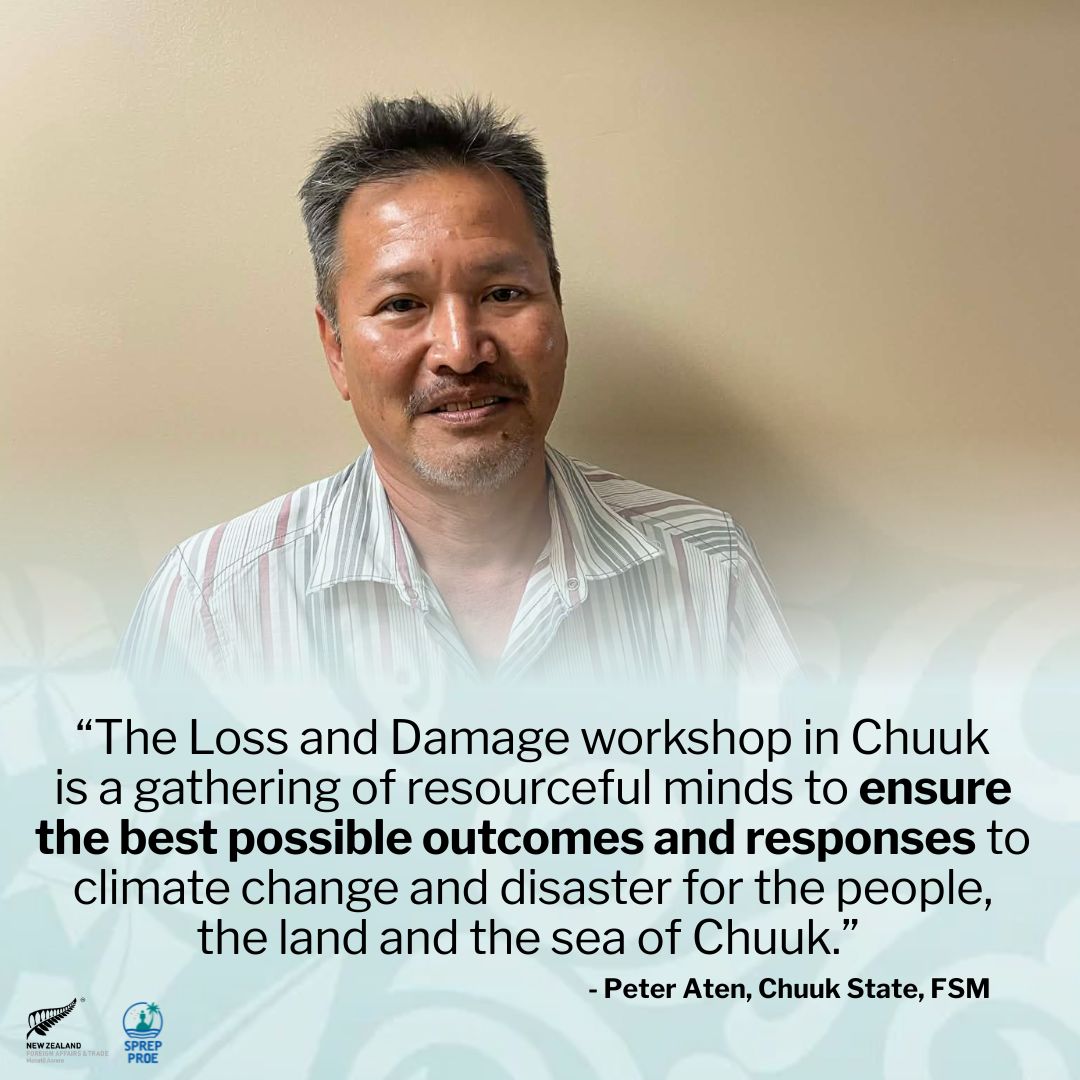
The Loss and Damage Capacity and Capability Project over the month of March, has conducted state level dialogues in Kosrae, Yap, Chuuk and Pohnpei. The priorities, definitions and experiences gathered from these dialogues provided the base of the national level dialogue held at the end of March. The workshops have helped build understanding of Loss and Damage, as well as learn more about people’s experiences as they face the impacts of Loss and Damage.
The workshop has also resulted in agreed definitions and priorities to inform future planning, policy and projects in FSM that relate to Loss and Damage.
“Mitigation and adaptation have done and will continue to do its part in order for our low-lying islands to thrive, but the importance of climate-related Loss and Damage lies in survival and resilience,” said Mr Johnathan Fichibman Fathal, Chief of Planning- Yap State Office of Planning and Budget.
“Our understanding of Loss and Damage must be ubiquitous to ensure collective responsibility in safeguarding our people, heritage, and the very ground upon which our people's future is built."
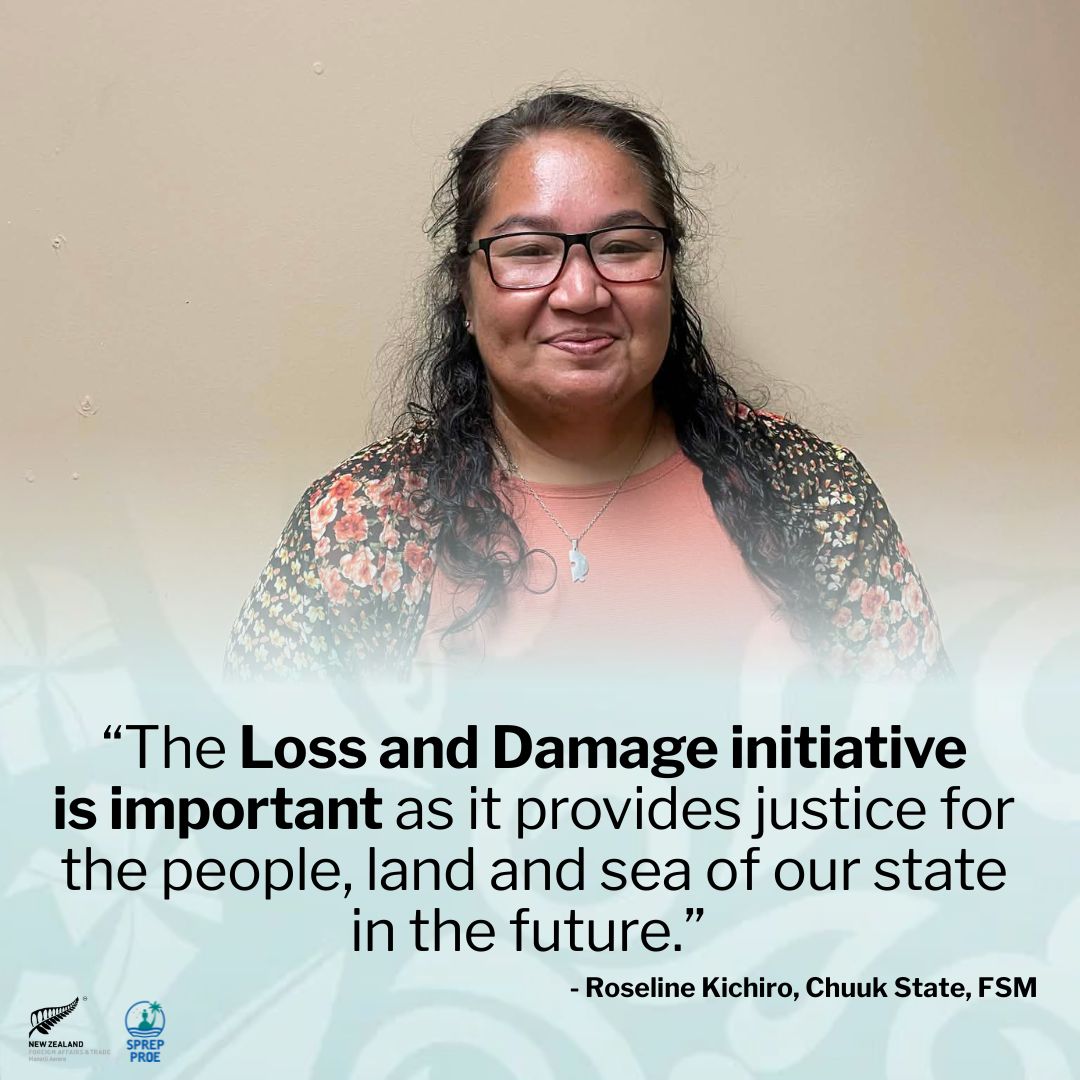
The workshops also provided climate change, environment, culture, economic, health and community stakeholders information on the current Loss and Damage landscape in the Pacific and helped to understand the experiences encountered by other sectors and communities within FSM.
"The Loss and Damage initiative is important as it provides justice for the people, land and sea of our state in the future," said Ms Roseline Kichiro, the Health Educator Division of Sanitation of Chuuk State.
The national Federated States of Micronesia National Loss and Damage Dialogue was held on 24 and 25 March 2026. A loss and damage dialogue was held in Kosrae on 3 – 4 March, Yap on 10 – 11 March, Chuuk on 17 – 18 March and Pohnpei on 20 and 23 March.
The Loss and Damage Capacity and Capability Project funded by the Government of New Zealand and implemented by the Secretariat of the Pacific Regional Environment Programme spans the Cook Islands, Federated States of Micronesia, Niue, Solomon Islands Tonga and Tokelau.