


Give to Gain IWD2026: Women make up half of the world’s population; their voices must be heard and reflected when it comes to planning infrastructure and development projects.
It just makes sense.
Working in partnership with our Pacific Islands, the Secretariat of the Pacific Regional Environment Programme (SPREP) has been amplifying this message through Environmental and Social Impact Assessment training across our region.
Known as ESIA, this is a process to identify, forecast and mitigate potential adverse environmental and social impacts of proposed development the projects. It ensures projects are sustainable, socially inclusive and assesses risks to ecosystems, communities and livelihoods.
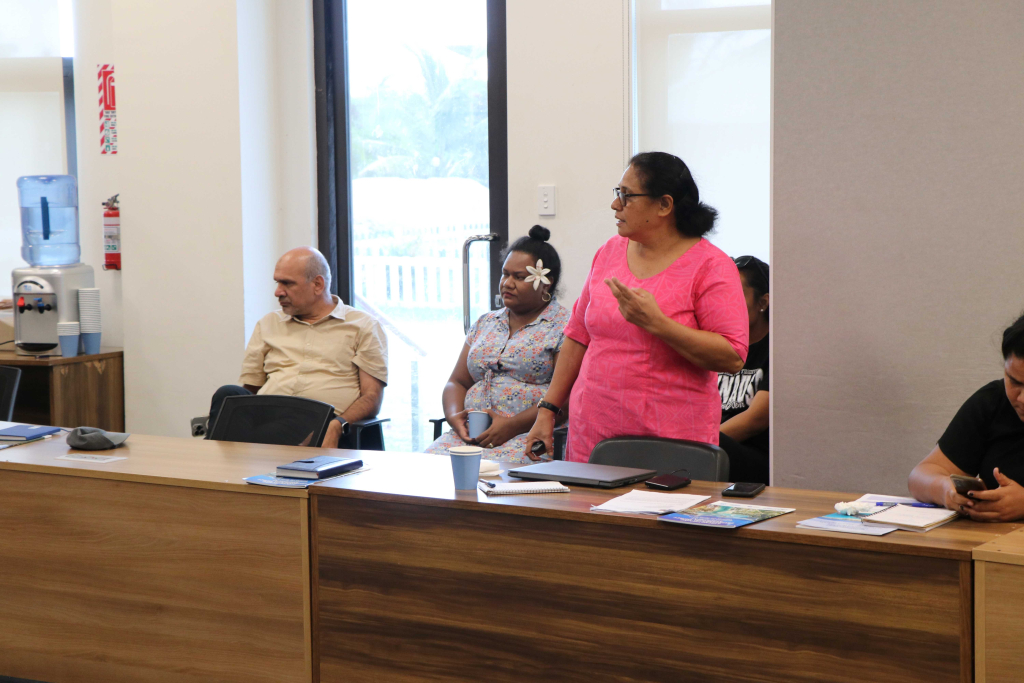
“ESIA capacity building by SPREP has given me the opportunity to look deeper into areas that we mostly overlook when we plan, implement, monitor and evaluate projects in Tuvalu,” said Ms Lilian Tine the Executive Director for the Tuvalu National Council of Women and also sits on the board of the Tuvalu Coastal Adaptation project . She participated in an ESIA training delivered by SPREP in partnership with UNDP and the Pacific Community (SPC) in 2025.
“This is significant from an NGO perspective, to make sure we encompass ESIA to identify and minimise deficiencies in the many projects, large or small, that would have negative impact on the sustainability of Tuvalu's future.”
“The training has widened my knowledge and skills to use ESIA in ensuring women's voices are reflected in any development initiatives in Tuvalu."
TNCW strives to enhance the political, economic and social status of women. It has advocated for women’s voices to be amplified and involved in conservation, agriculture and climate change programmes in Tuvalu.
Ms. Tine has led the TNCW since 2023, uplifted by their call for genuine engagement, proper financing for women’s initiatives, and the inclusion of gender in all stages of planning, budgeting, and monitoring.
“It is important that Pacific women's voices are taken seriously at all levels. The ESIA process is an ideal place in which this can happen,” said Ms Tine.
“In fact, ESIA with its gender inclusive element should always be tied to any development planning, or decision-making process. We can take stock of these processes and their positive and negative impacts on women’s lives, after all women are important development agents, implementers and beneficiaries of our rural and national development initiatives.”
Despite this, globally, women are still left being left behind.
According to the 2025 UN Gender Snapshot, 1 in every 4 women and girls lacked access to safely managed drinking water in 2024. On our current path of progress in the Sustainable Development Goals, by 2030 321 million women could still lack access to electricity. Globally women occupy just 30.0 percent of managerial positions.
One area where impacts for gender inclusivity can be improved at the national level is through the ESIA process for all development projects. And where women’s voices are not being heard, or respected, Tine encourages that people keep pushing until they are.
“You must be prepared to take on risks and to be strong to raise your voice constructively if you know that Pacific women's voices and gendered impacts are not taken seriously in ESIA processes. Seek support of genuine experienced, like-minded mentors, colleagues and women leaders when you're faced with uncertainty when pushing for women's voices to be heard,” advised Ms Tine.
“Be the voice of Pacific women to ensure that they're reflected and taken seriously during economic development, planning and decision making, be prepared and be brave in that that space.”
Tuvalu undertook ESIA training in 2025, it was the culmination of a partnership between the Government of Tuvalu, SPREP, and the Pacific Community (SPC). The initiative was supported through the Green Climate Fund-financed Tuvalu Coastal Adaptation Project (TCAP), implemented by the Government of Tuvalu with the support of the United Nations Development Programme (UNDP).