


19 March 2025, Tarawa – Measuring the effectiveness of the marine spatial planning (MSP) process in Kiribati was the focus of a three-day national workshop held recently in Tarawa.
The gathering was to consult with and actively engage key stakeholders in the co-development of a set of climate and biodiversity-aligned marine spatial planning indicators for monitoring and assessing their national-level MSP process, through a structured and inclusive approach, tailored to the country context.
The workshop was co-organised by Kiribati Ministry of Fisheries and Ocean Resources (MFOR), the Ministry of Environment, Lands and Agricultural Development (MELAD) under the umbrella of the Kiribati National Marine Spatial Planning Coordinating Committee (KMSPCC), and the Secretariat of the Pacific Regional Environment Programme (SPREP), and is a key output of the New Zealand Ministry of Foreign Affairs and Trade -funded Climate and Biodiversity-Smart Marine Spatial Planning (CaB-Smart MSP) Programme, implemented by SPREP.
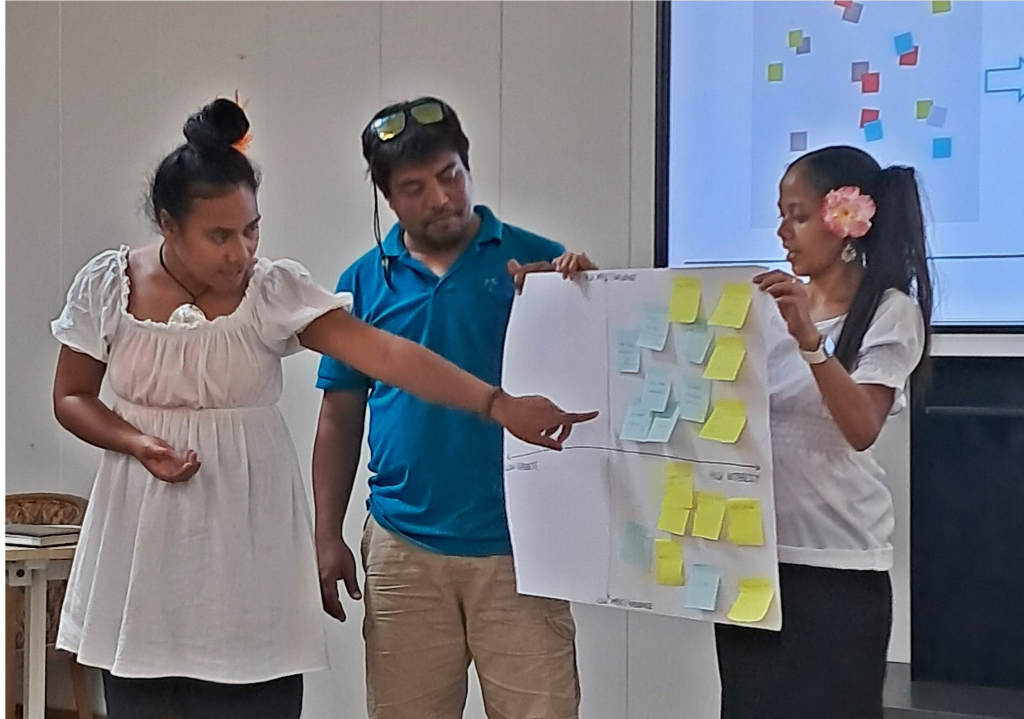
“Marine spatial planning aims to find a balance across human activities in the ocean space, therefore, the fact that people are at the core of the MSP process cannot be overstated,” said Mr. Kaiea Awira, national CaB-Smart MSP Coordinator, Ministry of Fisheries and Ocean Resources.
“For Kiribati, MSP should deliver a healthy, resilient, and thriving ocean by balancing sustainable use with the conservation of our natural, historical, and cultural heritage, for the benefit of I-Kiribati now and in the future.”
Over the 3-day period, participants actively engaged in articulating and confirming national marine spatial planning priorities, ensuring that the co-developed indicators are directly linked to priority national policy outcomes, such as climate resilience, biodiversity health, sustainable fisheries, cultural integrity, and socio-economic wellbeing.
Furthermore, a shared understanding was created amongst participants of what MSP indicators are meant to achieve, focusing on their role in tracking progress, improving governance, supporting transparency, and enabling evidence-based decision-making.
A key part of the workshop was the open sharing of perspectives, interactive discussions and practical group work, where participants utilised a set of prioritisation criteria to evaluate potential indicators according to aspects such as relevance, feasibility, data availability, data collection and monitoring capacity, and cultural significance.
Added Mr Awira: “I am happy to have contributed to the good discussions and practical activities during the workshop, particularly around co-developing relevant and realistic indicators for measuring how well our MSP process is meeting its objectives, through effective cross-sectoral coordination, ensuring the good health of our marine resources and long-term prosperity of our communities.”
The workshop engaged a total of 36 participants from across key national agencies and NGOs represented on the KMSPCC, including the Ministry of Environment (MELAD), Ministry of Fisheries (MFOR), Ministry of Information, Communication and Transport (MICT), Ministry of Culture and Internal Affairs (MCIA), Tourism Authority Kiribati (TAK), Ministry of Infrastructure and Sustainable Energy (MISE), Ministry of Women and Youth (MWYSSA), Kiribati National Shipping Line Ltd (KNSL), Central Pacific Producers Ltd, Kiribati Deaf Association (KDA), Live and Learn Environmental Education, Kiribati.
“The workshop followed a user-friendly format and a provided an enabling space for Kiribati MSP stakeholders to discuss, debate, and reach consensus on a preliminary set of indicators and I am pleased to note that this has fostered active participation in and ownership of the indicator co-development process over the last 3 days,” said Mr Vainuupo Jungblut, the Environmental Monitoring and Reporting Adviser, SPREP.
The co-developed indicators will align closely with Kiribati’s marine spatial planning objectives and policy frameworks, specifically the Kiribati National Ocean Policy, the Kiribati Integrated Environment Policy and will contribute to broader national priorities around marine conservation and ocean governance.
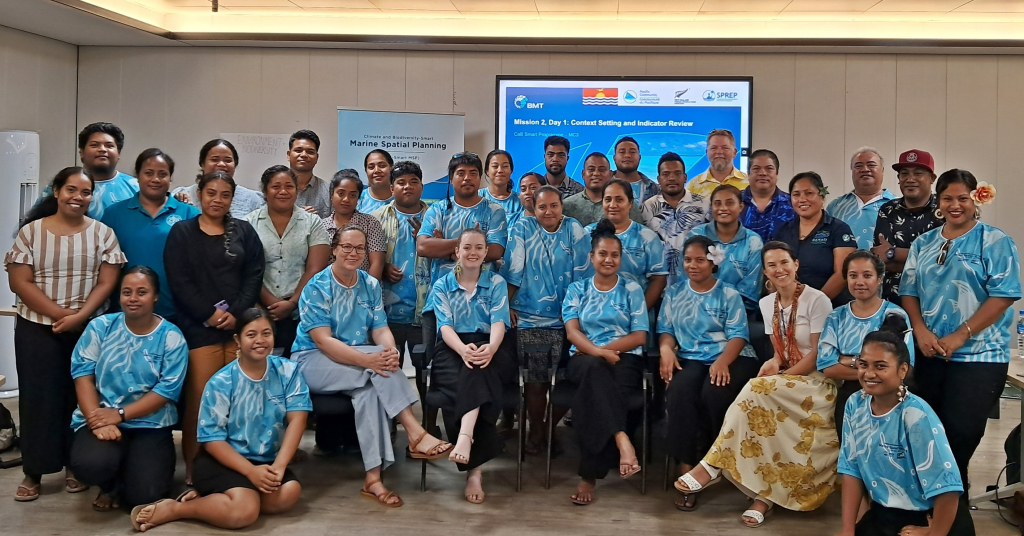
The national Climate and Biodiversity-Smart MSP Indicators Co-Development Workshop for Kiribati was held from 2-4 March 2026, facilitated by BMT Commercial Australia Pty Ltd, under contract to SPREP and was made possible through the Climate and Biodiversity-Smart Marine Spatial Planning (CaB-Smart MSP) Programme, funded by the New Zealand Ministry of Foreign Affairs and Trade. The CaB-Smart MSP Programme underscores New Zealand’s commitment to assist Pacific Island nations in addressing and adapting to the challenges posed by climate change, it is part of New Zealand's broader International Climate Finance Strategy and aims to bolster the capabilities and capacities of Pacific Island countries to lead tailored approaches to marine spatial planning and marine protection. These approaches are designed to enhance marine conservation efforts, balance economic and conservation objectives, and fortify resilience against the adverse impacts of climate change.
SPREP is leading on two multi-country components of the Programme, which have a specific focus on strengthening understanding of how Traditional Knowledge and customary practice work alongside marine spatial planning and developing country-specific climate and biodiversity-relevant marine spatial planning indicators. Implementation of the Programme is being closely coordinated with regional partners including The Pacific Community (SPC) and aligns with and contributes to key regional frameworks such as the 2050 Strategy for the Blue Pacific Continent, the Framework for a Pacific Oceanscape and the Pacific Islands Regional Ocean Policy.
For more information on the CaB-Smart MSP Programme, please contact Vainuupo Jungblut
Environmental Monitoring and Reporting Adviser (vainuupoj@sprep.org ) and/or Mr. Patea Setefano, CaB-Smart MSP Programme Coordinator (patea.ext@sprep.org )