


Representatives from 14 Pacific Island countries gathered in Nadi to advance regional efforts to manage marine pollution.
The three-day Regional Workshop on the promotion of the London Protocol and the Noumea Dumping Protocol, held from 25–27 March 2026, helped transition high-level international legal frameworks into practical, national implementation strategies for the Blue Pacific.
Organised by the Secretariat of the Pacific Regional Environment Programme (SPREP) in collaboration with the International Maritime Organization (IMO), the initiative is supported by the Government of the United Kingdom and the IMO.
The workshop is a critical step in assessing the readiness of SPREP Member countries to ratify and effectively implement the London Protocol 1996 (LP 1996) and the 2006 amended Noumea Dumping Protocol (NCDP2006). It follows the distribution of a regional questionnaire designed to identify specific legal, technical, and administrative barriers to accession.
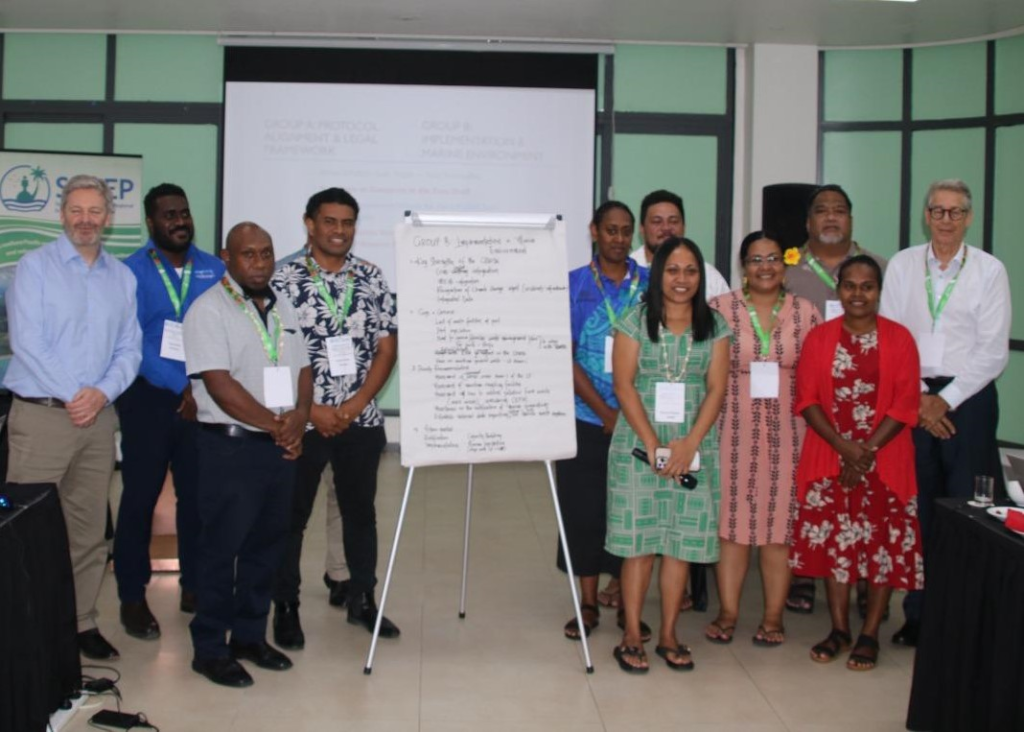
"This workshop is a pivotal component of a focused consultancy aimed at assessing the needs and readiness of SPREP Member countries to ratify and effectively implement these protocols," said Dr. Mohammed Asid Zullah, SPREP Pollution Adviser.
"It is designed to transition from high-level legal frameworks to practical national implementation strategies that safeguard our regional resources.”
The London Protocol (1996) and the Noumea Dumping Protocol (1986/1990) are international and regional agreements, respectively, aimed at preventing marine pollution by restricting waste dumping at sea.
Mr Andrew Birchenough, Technical Officer IMO’s Office for London Convention/Protocol & Ocean Affairs, emphasised the collective benefits of these frameworks.
"For Pacific countries whose livelihoods and cultures depend on the ocean, acceding to, and implementing, the London Protocol is an important step in safeguarding marine ecosystems while supporting sustainable development and responsible ocean use”.
The workshop’s agenda addressed a broad spectrum of technical and legal challenges, featuring training on the Waste Assessment Guidelines (WAG) for wastes such as dredged material and its beneficial uses.
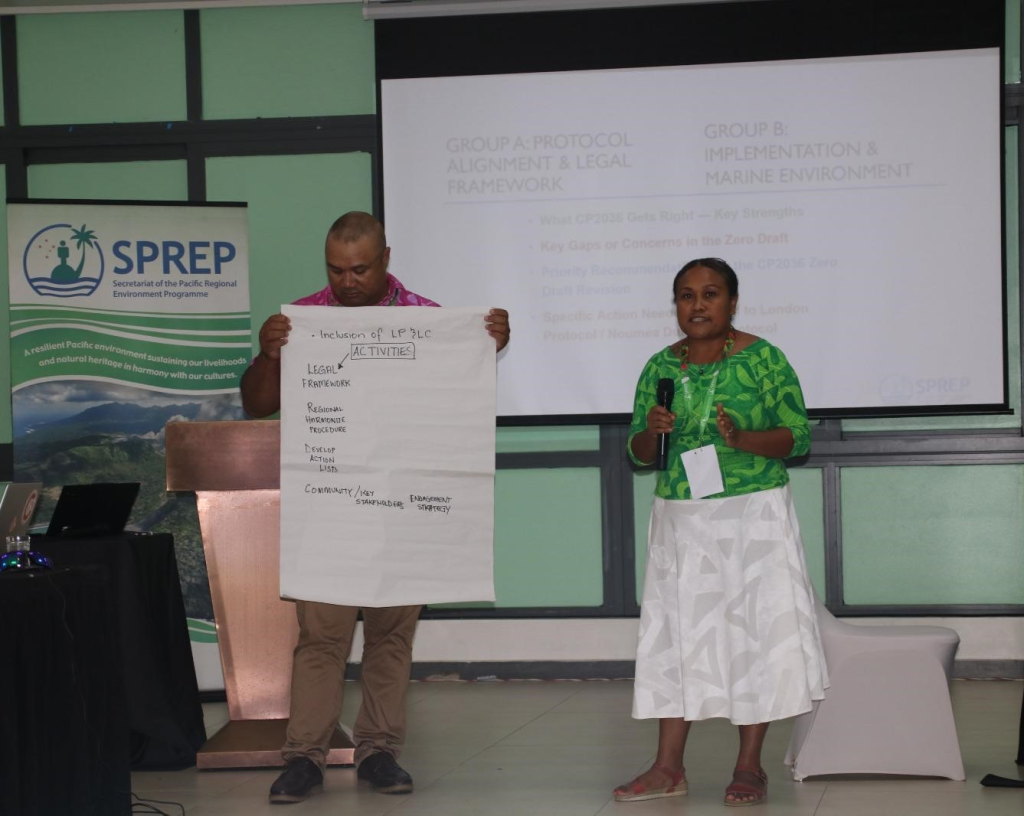
To ensure effective environmental protection, delegates will examine monitoring and compliance procedures, with a focus on low-tech, low-cost monitoring techniques and field surveillance.
The workshop also explored the intersection of ocean governance and climate change mitigation, specifically regarding the regulation of carbon capture and storage (CCS) in the sub-seabed and marine geoengineering. Additionally, the programme was tailored to address urgent regional priorities, including the end-of-life management of fiberglass vessels, ensuring that the solutions discussed are relevant to the unique challenges of the Pacific.
The workshop brought together a unique cross-section of officials from both Environment Ministries and Maritime Administrations. Participating countries include the Cook Islands, Fiji, Kiribati, Nauru, Niue, Palau, Papua New Guinea, Samoa, Solomon Islands, Tuvalu, and Vanuatu.
A road map was developed by participants to guide implementation, identifying specific national activities and timelines to overcome barriers to protecting the Pacific Ocean.