


Directors, senior Government officials from Health, Climate Change departments and research institutions from the Federated States of Micronesia, Kiribati, Samoa, and Solomon Islands gathered in Apia to strengthen the resilience of their communities to the health impacts of climate change.
The first PAVE – Health and Climate Change Project regional workshop, hosted by the Pacific Climate Change Centre (PCCC) at SPREP’s headquarters in Vailima Samoa, was held from16-20 March 2026. The one-week training was opened by SPREP’s Acting Director General, Ms Easter Chu Shing.
“Pacific Island countries and territories stand at the frontline of extreme weather events, rising temperatures, and changing ecosystems and confronted with the growing health impacts linked to these environmental pressures and climate change extreme risks,” Ms Chu Shing said.
“The PAVE Health and Climate Change has enabled us to access up to AUD 4.8m from the Wellcome Trust focused on generation of evidence in the health sector on climate change, building capacity and development of policy tools to respond to climate change in the health sector.”
The ‘Pacific Action to enhance the Visibility of Evidence on Health and Climate Impacts’ is a three-year regional initiative birthed from a partnership between the PCCC hosted at the SPREP and the University of Melbourne.
Associate Professor Rebecca Patrick, of The University of Melbourne, said PAVE-Health is a flagship project in the University of Melbourne’s ongoing collaboration with PCCC, SPREP and partner organisations in FSM, Kiribati, Samoa and Solomon Islands.
“We view the University’s role in this PAVE‑Health regional workshop as helping to strengthen and elevate health considerations —turning climate and health expertise into practical tools, national training, and evidence that supports policy decisions and improved health outcomes across the region,” she said.
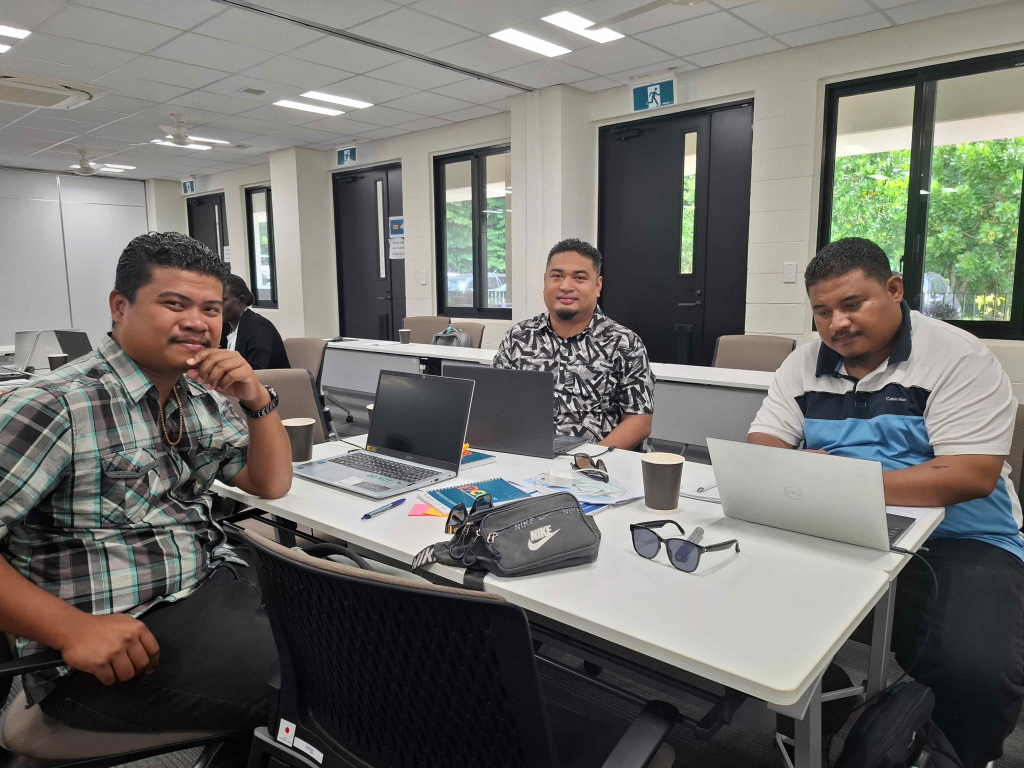
The workshop in Samoa provided Master Trainers with the chance to share what works in training delivery in-country, and their implementation experiences with climate and health training, assessment and, or policy design.
The gathering was also an opportunity for country teams to meet with project staff to plan for the forthcoming national-level trainings and the community-level research activities scheduled for 2026. This forms a critical milestone in the implementation of activities at the national level where it mattes the most.
“I encourage all participants over the cause of this week’s workshop to engage openly, share your experiences, and explore opportunities for collaboration,” added Ms Chu Shing. “The diversity of expertise in this room is fundamental as you progress towards implementation in your respective countries.”
SPREP’s Acting Director General acknowledged the support of SPREP member countries and the team from the Climate Futures at the University of Melbourne present in Samoa for the training.
PAVE – Health aims to upskill policymakers, researchers, and health practitioners to draw attention to and reduce climate-related health impacts across the Federated States of Micronesia, Kiribati, Samoa and Solomon Islands.