


17 April 2026, Tanna Island - The forests of Tafea Province hold some of the richest terrestrial flora in Vanuatu and on Tanna Island, this biodiversity is deeply intertwined with traditional ecological knowledge that has been preserved for generations.
Places like Mt Tukusmera, Mt Melon and Green Hill remain among the last intact forests, standing as living archives of both nature and culture. However, these landscapes face mounting pressures from cyclones, volcanic ashfall, invasive species and climate change impacts, to unregulated development, pollution and waste.
In response, communities have established conservation areas such as Nimatang and Nusumetu Tibinemei, which serve as vital sanctuaries and learning grounds for resilience. These initiatives are being led by the Vanuatu Department of Environment Protection and Conservation (DEPC) in coordination with other ministries, departments and provincial councils, regional organisations and donors.
Invasive species like weeds and predators, like rats, ferral pigs and cats, are not just nuisances, they threaten food gardens, water sources and the delicate ecosystems that sustain island life. For families in rural Vanuatu, the unchecked growth of invasive weeds can mean reduced harvests, compromised biodiversity and weakened resilience in the face of climate and environmental pressures.
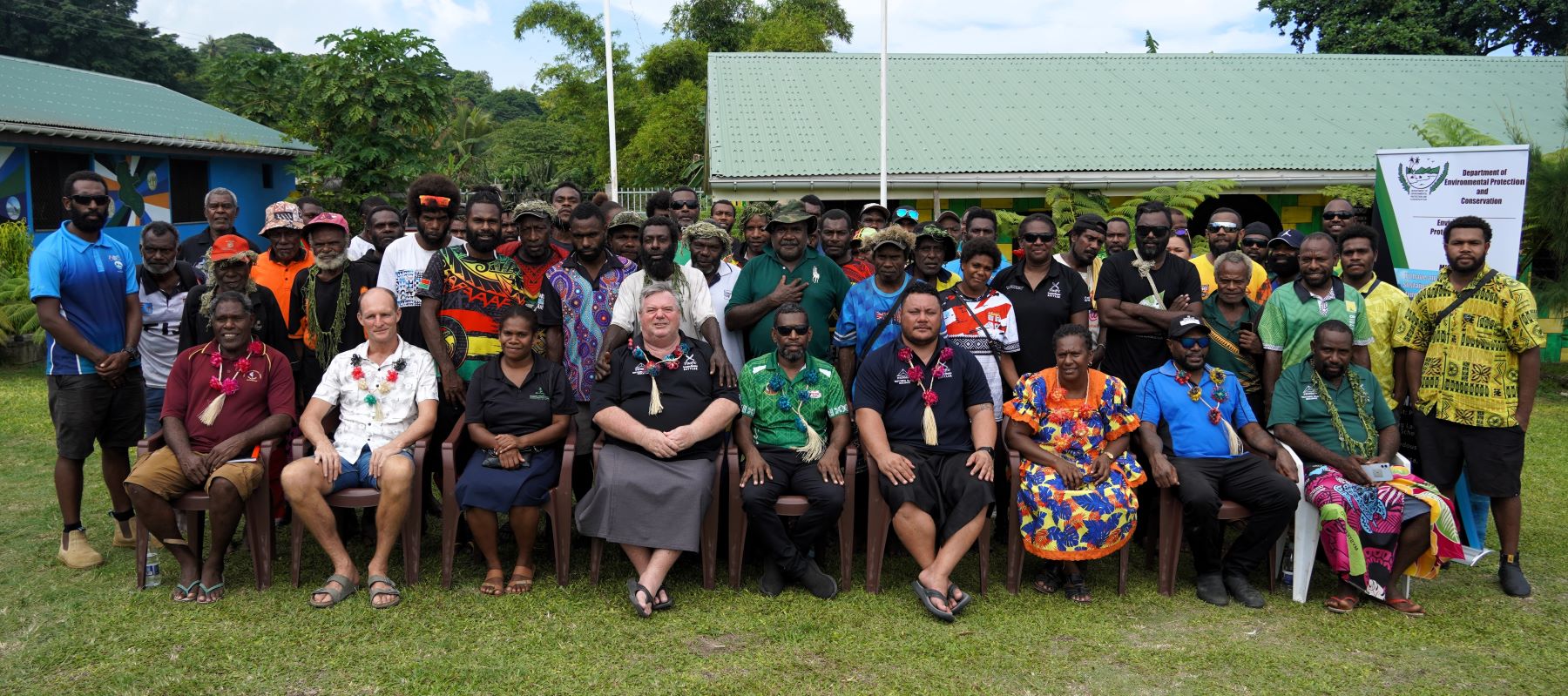
Against this backdrop, on Tanna Island, from 13–17 April, rangers from across Vanuatu will gather for the Pacific Regional Invasive Species Management Support Service (PRISMSS), Resilient Ecosystems, Resilient Communities (RERC) Rangers Network Exchange Programme, a workshop that carries importance for communities confronting the spread of invasive weeds and predators.
The Secretariat of the Pacific Regional Environment Programme (SPREP) led PRISMSS RERC programme in Nusumetu Conservation site, in Tanna, has already shown how community rangers can lead the fight against these threats. By combining traditional knowledge with modern conservation science, and the right resources and tools, rangers are learning to identify invasive species early, apply practical management techniques and integrate cultural practices that ensure solutions are accepted and sustainable.
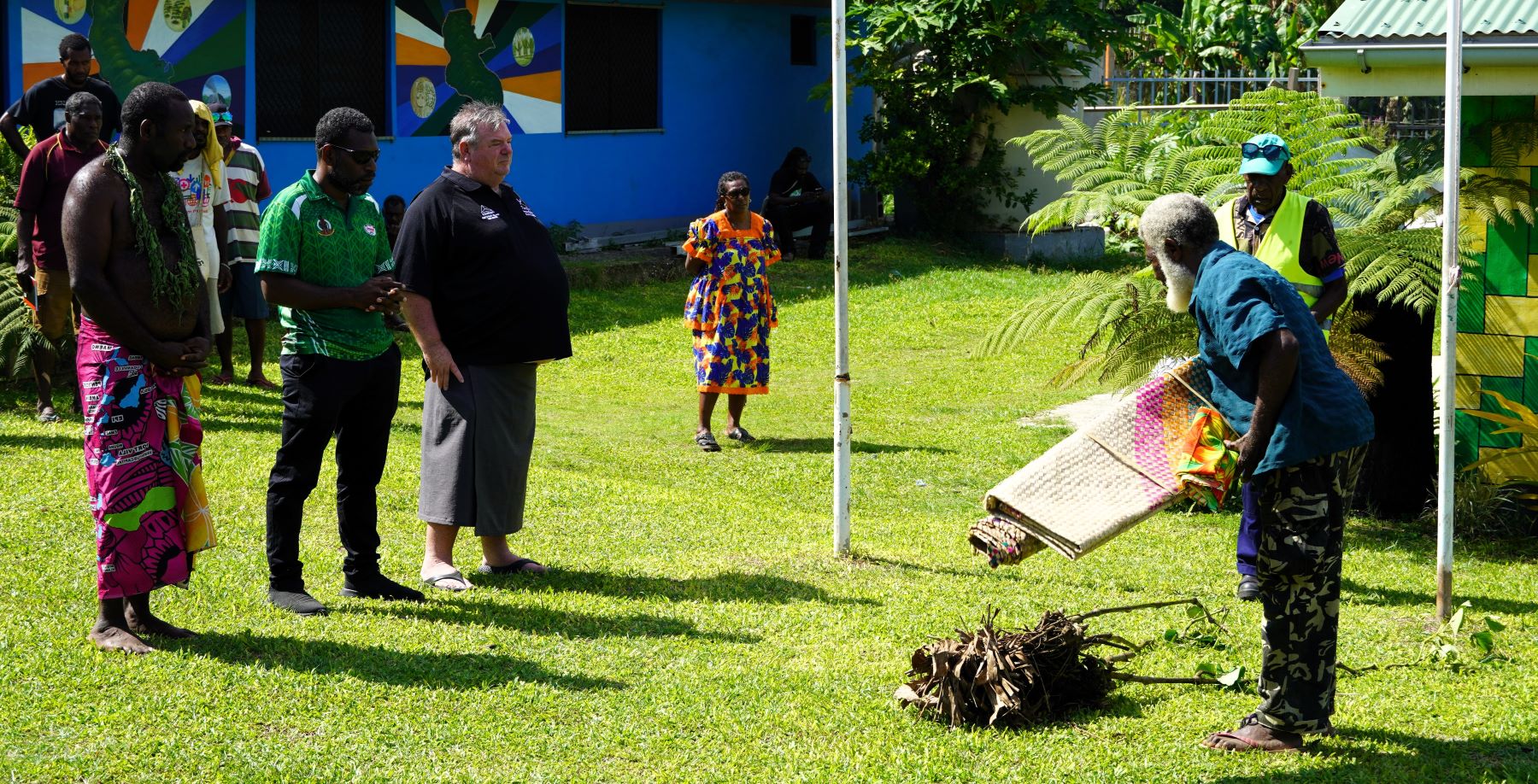
A community capacity building programme was undertaken at the Nusumetu conservation site by the PRISMSS RERC programme in 2025, where community rangers were provided with tools, resources and trained on how to properly use them to manage invasive weeds within identified management zones.
This approach empowers communities to take ownership of resilience-building, rather than relying solely on outside interventions. It transforms invasive species management into a story of empowerment, where protecting gardens, forests and watersheds also strengthens social bonds and cultural identity.
While delivering the opening remarks, Mr Rexton Mogeror, Principal Provincial Outreach Officer, DEPC, shared that, “the week’s overarching theme “Restore the Forest and Strengthen the Community” captures both the ecological and social dimensions of resilience.”
“Knowledge-sharing sessions on weed management, led by rangers from Nusumetu Tibinemei and DEPC, highlight the practical skills needed to implement national strategies such as the National Invasive Species Strategy and Action Plan (NISSAP), the National Biodiversity Strategy and Action Plan (NBSAP) and the NEPIP and Tafea Corporate Plan.”
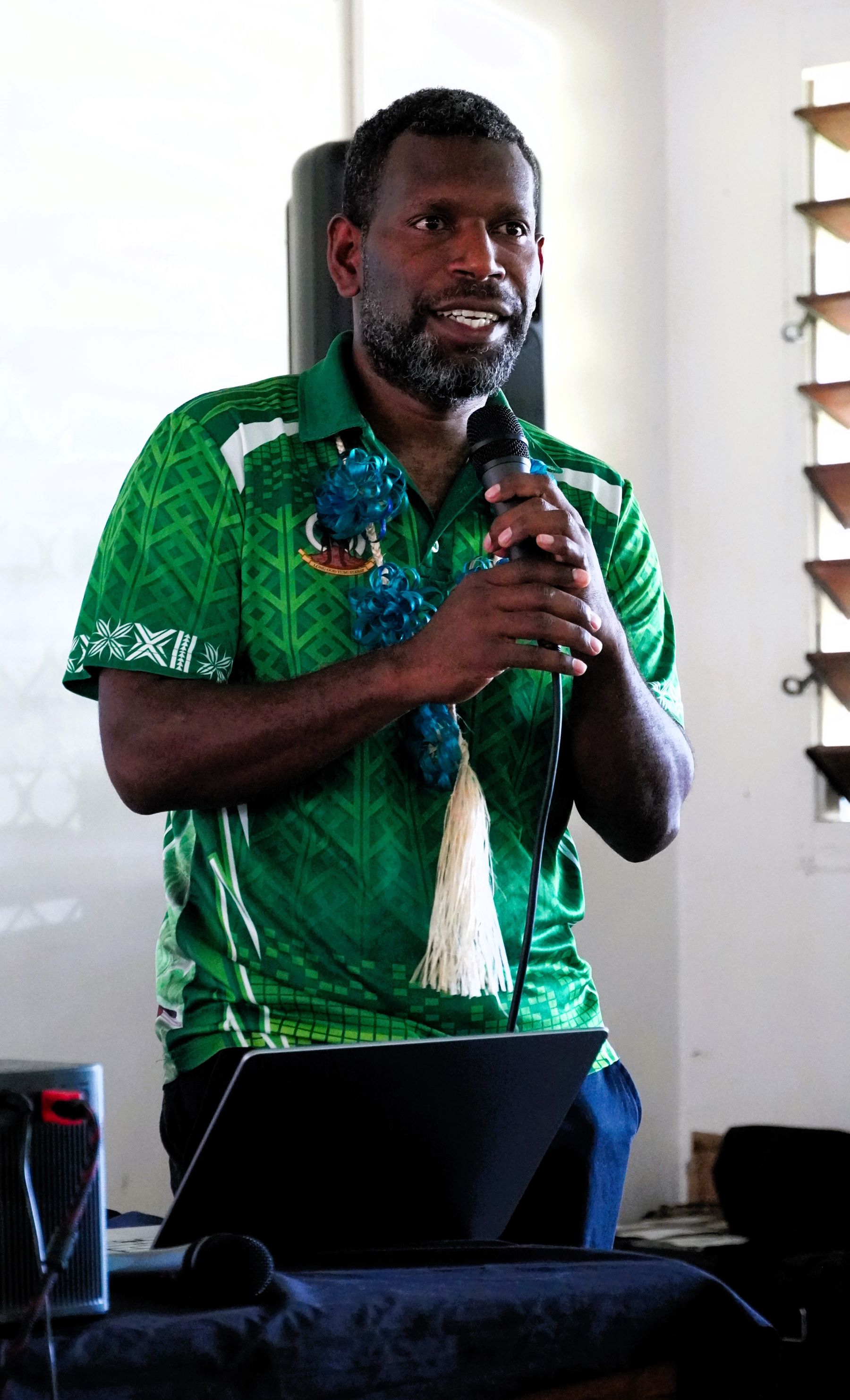
Mr Mogeror reflected that the programme was about more than technical solutions but about communities working together, sharing knowledge and building resilience in the face of shared threats.
“We are thankful to PRISMSS/SPREP and the donors as they are helping to unite rangers, communities, government and partners, Vanuatu is not only protecting its forests but also strengthening the bonds that make resilience possible.”
“The call to keep the momentum is a reminder that success depends on collective commitment as invasive species do not respect boundaries and neither should the solutions.”
The rangers exchange programme in Tanna builds on this foundation by offering participatory sessions, field demonstrations and peer-to-peer learning. These activities are designed to build confidence, foster collaboration, strengthen rangers networking and ensure that resilience is woven into everyday life once the rangers return to their respective provinces.
The interactive sessions will enable community rangers to better understand why it is important to manage high value ecological sites, how to decide which sites to manage, what kinds of invasive species threaten ecosystems, how are invasive species are managed in the whole site, how can ecosystem structure be re-introduced and who should be involved.
The exchange also expanded its scope, based on previous community feedback, to include predator control and management, with BirdLife International contributing expertise on rat, ferral pig and cat control, and discussions spanning priorities from different community conservation areas across Vanuatu. The involvement of the PRISMSS team from SPREP ensures that these efforts are aligned with regional frameworks and contribute to a wider Pacific battle against invasive species.
SPREP Invasive Species Adviser, Mr David Moverley shared that, “the PRISMSS RERC Rangers Network Exchange Programme is more than a workshop but a collective movement that equips communities with tools, knowledge and solidarity to fight invasive weeds, protect cultural heritage and build community resilience.”
“These ranger exchanges are seeds of hope that resilience grows strongest when nurtured by community, culture and collaboration and for Vanuatu, resilience means the ability to withstand shocks whether environmental, economic or social and invasive species management is a critical part of that equation.
The Pacific islands share common challenges such as invasive species, climate change, and fragile ecosystems. Ranger networks are the bridges that connect communities across these scattered lands.
Beyond Vanuatu, ranger networks are vital for the wider Pacific as they can create pathways for knowledge exchange, allowing lessons learned in Tanna to inform strategies in the region. They strengthen capacity building, equipping rangers with skills that ripple across the region and foster solidarity and resilience, reminding communities that they are part of a larger Pacific battle facing shared challenges.
The PRISMSS RERC programme has similar planned rangers’ network and learning exchange programmes scheduled for Solomon Islands and Federated States of Micronesia in 2026.
About PRISMSS: The Pacific Regional Invasive Species Management Support Service (PRISMSS) is a service designed to facilitate the scaling up of operational management of invasive species in the Pacific. PRISMSS brings together experts to provide support within the Pacific region with a focus on protection of indigenous biodiversity and ecosystem function. As a service provider, PRISMSS provides a comprehensive suite of support services in a cohesive, effective, efficient, and accessible manner to Pacific Island countries and territories.
Restoring Island Resilience (RIR): The PRISMSS - Restoring Island Resilience (RIR) is a New Zealand-PRISMSS collaboration project that aims to improve Pacific Island Countries and territories livelihoods and resilience to climate change by reducing the impact of invasive species on natural and agricultural ecosystems through the six PRISMSS programmes.
PRISMSS Powered by: New Zealand Foreign Affairs & Trade, United Kingdom International Development, GEF, United Nations Environment Programme & SPREP.
PRISMSS Partners: Bioeconomy Science Institute NZ, Birdlife International, Earth Sciences New Zealand, New Zealand Department of Conservation, Island Conservation, the Pacific Community and SPREP.
PRISMSS Programmes: Protect Our Islands (POI), Predator Free Pacific (PFP), War on Weeds (WOW), Natural Enemies Natural Solutions (NENS), Resilient Ecosystems Resilient Communities (RERC) and Protect Our Marine Areas (POMA).
For additional information please contact Mr Dominic Sadler, PRISMSS Manager on dominics@sprep.org or Mr Nitish Narayan, PRISMSS Communications & Liaison Officer on nitishn@sprep.org