


20 April 2026, Suva - When participants from Fiji, PNG, Samoa, Tonga and Vanuatu came together for the recent EU/SPREP Pacific BioScapes Sea Turtle Monitoring and Data Collection Field Training in Fiji, one thing quickly became apparent to all present.
The work the were there to do was a natural continuation of the hard work of the late Mauigoa Lui Apela Johannes Bell, who will always be remembered for protecting marine species in the Pacific.
Falasi’i Faleafaga Toni Tipama’a, of the Samoa Conservation Society, remembers Mr. Bell very well:
“He is gone but never forgotten,” said Falasi’i. “When working with species conservation in Samoa, we always remember someone like him. He joked a lot and always was social. He was a lovely man. A person you could talk to. He was free!
“Some people are hard to get along with, but he was always approachable and friendly. A person who opens the door to anybody. Doing this work here today is our way to continue the legacy of this lovely person.”
Mr. Lui Bell passed away in 2012 but his legacy lives on.
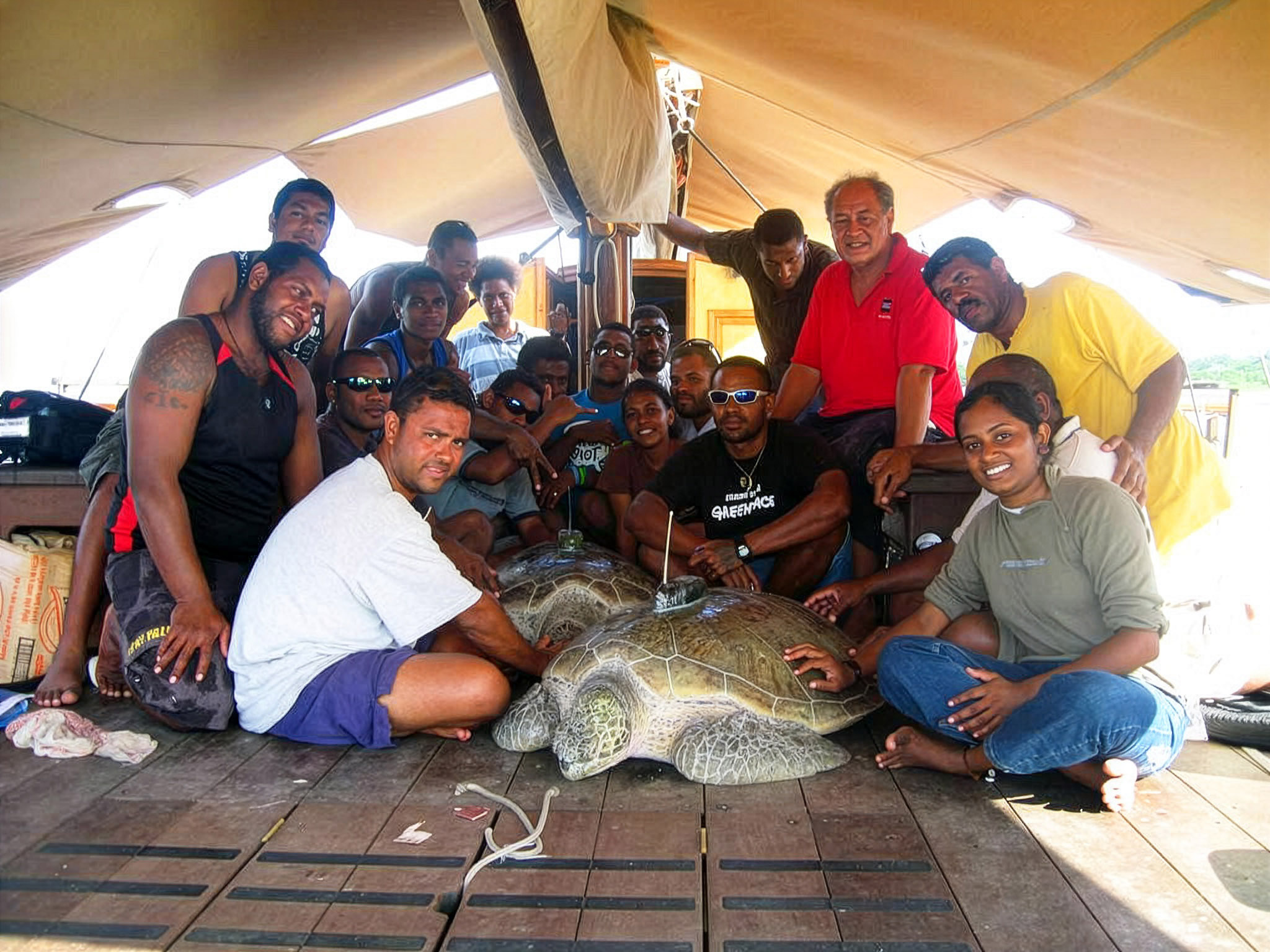
Mr Bell joined the SPREP family in 2005 and was responsible for developing and implementing ground-breaking approaches for monitoring the migration paths of turtles. He was also the architect of over 18 million square kilometres of whale and dolphin sanctuaries in the Pacific Ocean.
Malakai Tuiono, of Vatuvara Foundation, highlighted Mr. Bell’s contribution to turtle conservation in Fiji.
“I would like to always give acknowledgement to that gentleman, Mr. Lui Bell. I was a volunteer in 2010 when I met him at a workshop. He changed my mindset. From that moment, all the turtle monitoring in Fiji really started once Mr. Lui Bell introduced it,” said Malakai.
“He always had the door open to me. In this stage where I am now, I will always remember Mr. Lui Bell. Even though he was my senior, I could always sit beside him and talk story.”
Teaching perseverance and determination was central to Lui’s character. Donald Aromalo from Vanuatu is coordinating the Vanua-tai Turtle Monitors Network through Wan Smolbag.
Mr. Aromalo remembered Lui: “I first met Lui Bell in Port Vila and I knew straight away he was a great guy. He was tough, but nice at the same time. He was open and could communicate freely. We really miss him a lot.
“Lui sometimes followed us to the turtle nesting sites in Vanuatu and I remember at one time, there was a satellite tag on a turtle. But unfortunately the turtle was captured, we could see the signal going around on the land. Everyone tried to find the tag but couldn’t. \
“After Lui left, I tried and tried again. I went back to the village and finally found it. Then I could send it back to SPREP and it could be used again.”
Jayven Ham, of the Ministry of Fisheries, Ocean & Maritime Affairs in Vanuatu also worked closely with Mr. Bell.
“I met him in 2008 at a village in Northern Efate, he had world class knowledge to share. Not only with turtles, but also dugongs, seagrass and mangroves. A very experienced guy. I was so excited to meet him! He became one of my mentors in my life,” Jayven recalled.
“I learnt a lot from him. Especially with turtles. He shared a lot of his experience from Pacific Islands countries, and he influenced me to focus on all those species that are of special interest. As we have both turtles and dugongs in Vanuatu.
“If he was at an international meeting, I always sat beside him. I wanted to hear what he had to say as it was always so interesting. He always saw that if you were uncertain about anything, he would tell a joke and make everyone feel okay and then he would make it easy to work together for everyone.
“After he left us, there was a gap left in the work for migratory species work in the Pacific. But now in this moment, we are here together again today to continue this important work with the team from SPREP. I am glad that his scholarship is still available for species research in the Pacific. In this way his legacy will live on.”
The scholarship launched by SPREP and the family of Lui Bell in 2013 in honour of his memory, awards up to 20,000 USD to Pacific islanders undertaking studies in marine science with a focus on conservation of threatened marine species, in particular turtles, cetaceans, dugongs and sharks.
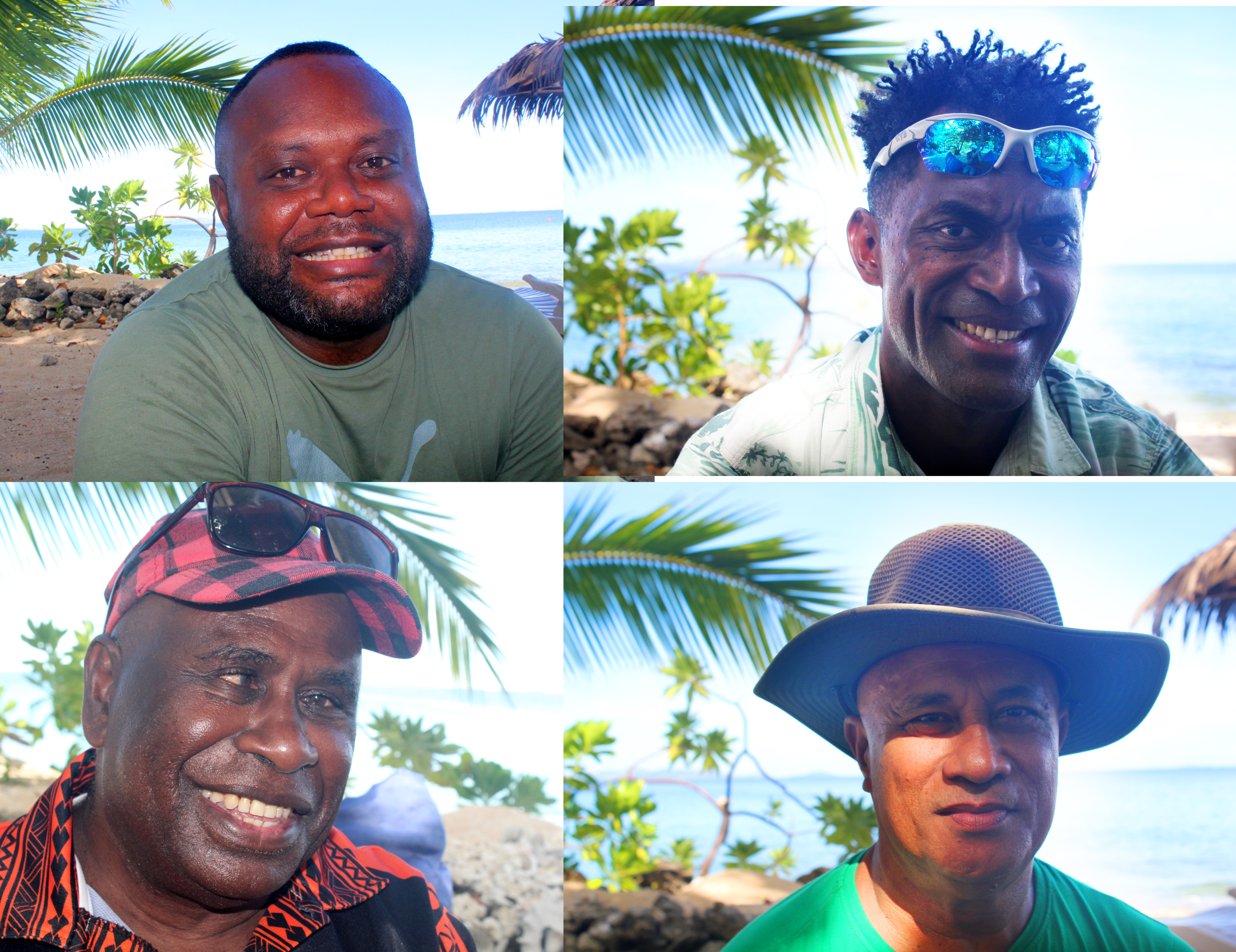
The tributes for Mr. Bell were collected from participants at the EU/SPREP BioScapes Sea Turtle Monitoring & Data Collection Field Training that took place 23-27 March 2026 at South Sea Island in Fiji.
Participants learned about the SPREP TREDS database, nesting surveys, night surveys, beach patrols, nest relocation, tagging and genetic sampling of turtles. With this improved knowledge and new toolkits provided by SPREP, participants are now able to increase the effectiveness of turtle monitoring being implemented by governments and NGOs across the Pacific region.
The Sea Turtle Monitoring & Data Collection Field Training was made possible through the support of the European Union (EU) under the SPREP Pacific Bioscapes Programme.
The Pacific Bioscapes Programme aims to contribute to the sustainable development of Pacific Small Island Developing States through the implementation of regional activities and 30 national activities taking place across a diversity of ecosystems in the Cook Islands, Fiji, Kiribati, Republic of the Marshall Islands, Federated States of Micronesia, Palau, Papua New Guinea, Samoa, Solomon Islands, Tonga and Vanuatu.
For more information please visit: https://www.sprep.org/bioscapes
The Turtle Research and Monitoring Database System (TREDS) provides invaluable information for Pacific Island countries and territories to manage their turtle data resources. TREDS can be used to collate data from strandings, tagging, nesting, emergence, and beach surveys as well as other biological data on marine turtles. TREDS can also be used to monitor and sustainably manage marine turtle populations as well as their nesting and foraging sites.
For more information please visit: https://www.sprep.org/thetreds