


Fiji’s Environment Management (Amendment) Act 2025 aims to protect and sustain Fiji’s environment when it comes to development.
Under the current legislation there is a process in place the screens, assesses and approves development proposals across the regulating and licensing agencies with Department of Environment having the final responsibility for decision making.
The 2025 Amendment introduces binding timelines, clarifying that no licence or approval can be issued without the completion of the environmental assessment process.
A three-day workshop was convened by the Ministry of Climate change (MECC) and the Secretariat of the Pacific Regional Environment Programme (SPREP) to strengthen processes under the 2025 Amendments.
"This moment is a turning point for Fiji’s environmental governance. This is not just about understanding a new law," said Dr Sivendra Michael, Permanent Secretary of MECC. "It is about how we work together, consistently and accountably, to make sure that development in Fiji does not come at the cost of our environment or our communities."
He further acknowledged the legislative reform creates both an opportunity and an obligation to build the internal capacity and cross-agency relationship that the new framework demands.
The 2025 amendments respond to emerging gaps in environmental governance by establishing the Department of Environment as the lead government agency responsible for development proposal assessment, guided by licensing authorities who retain their mandates but must now align with the reformed EIA governance framework.
The changes introduce new requirements relating to management of proposals and formalises the full EIA process from screening through to decision-making, public consultation and enforcement.
“SPREP stands by, committed to support our Pacific Islands in translating legislation, regulations and policy into practice,” said Mr Jope Davetanivalu, Director of Environmental Governance of SPREP.
“Fiji’s work towards navigating the balance between development pressure and environmental responsibility holds valuable lessons for many of our islands across the Pacific.”
The workshop spanned the practical mechanics of the amendments as well as building an understanding of the revised EIA workflow. This was also the opportunity to learn of the mandates of the different licensing authorities, and the coordination of all under the new framework.
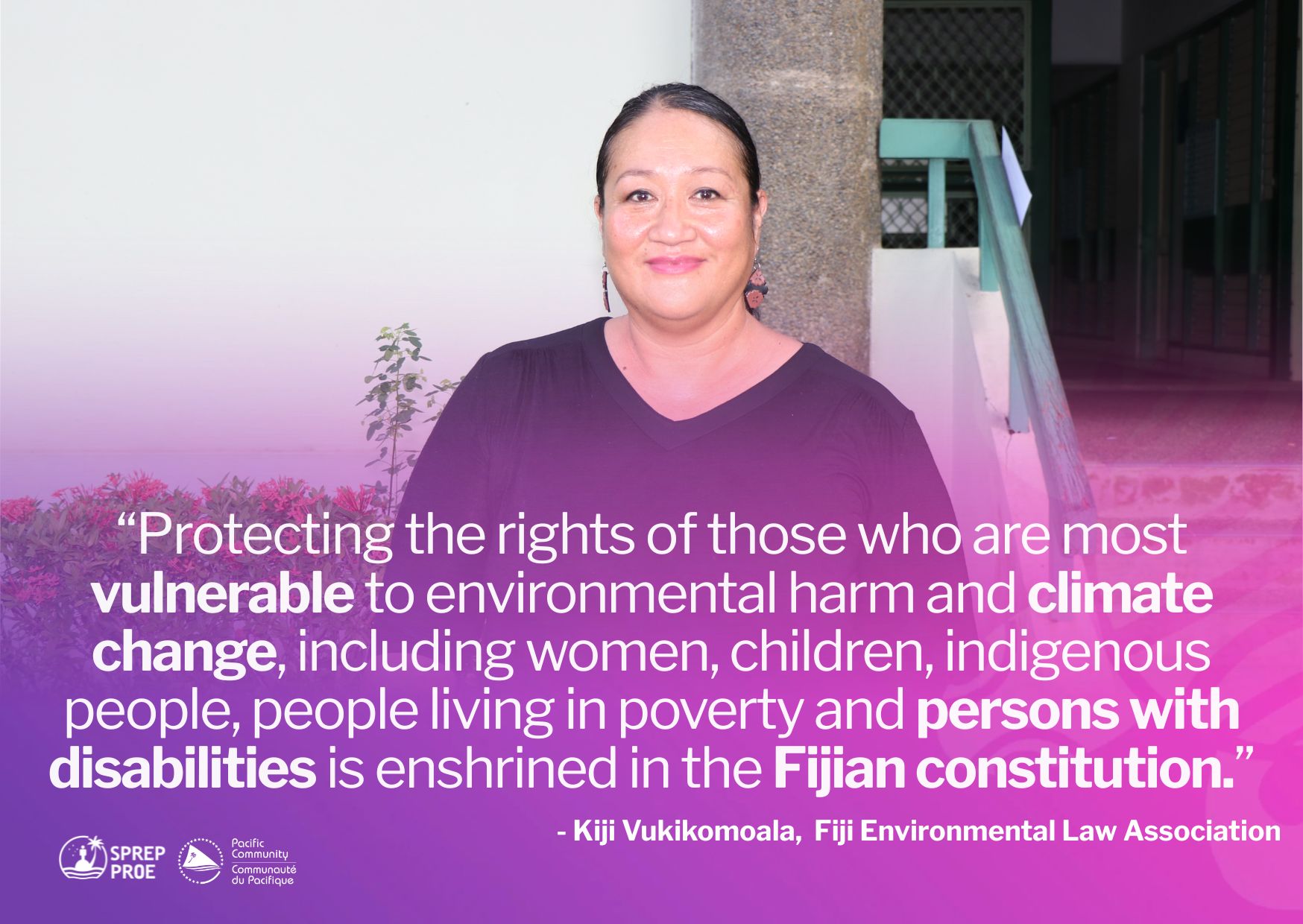
Embedding gender equality and social inclusion within environmental assessments in Fiji is a key factor under this amended act. Special sessions were held during the workshop to ensure this is strengthened.
Ms Sera Taoi, Senior Environment Officer with the Department of Environment, noted "For the first time, we are having this conversation inside the EIA process itself," she said. "Not as a separate gender workshop, but as part of how we do our jobs."
The outcomes of the three day workshop will feed directly into SPREP's review of its Regional EIA Guidelines developed in 2016. These will be updated to incorporate a strengthened GESI framework informed by the practical experience and recommendations generated at the Suva workshop.
For Fiji, the immediate next steps are grounded: ensuring that Department of Environment staff apply the new EIA procedures consistently; strengthening the interface between the DOE and licensing authorities under the centralised model; and beginning to integrate GESI screening questions and review criteria into the operational tools that the amended Act requires.
For us, this workshop was also a reminder that environmental governance, at its best, is a collective undertaking. As we heard, Fiji's forests, coastlines, rivers and communities are not managed by any single agency,” said Mr Davetanivalu.
“Feedback from participants highlighted their increased understanding of the risks of assessing development without considering the different needs of the people impacted and the risks involved, and possible ways to mitigate these based on the reformed legislation. This was very encouraging.”
The Fiji EIA and GESI National Workshop in Suva, Fiji from 12 – 14 April 2026 was convened by the Ministry of Environment and Climate Change with technical support from SPREP. It brought together over 30 participants across Fiji's environmental, regulatory and gender equality and social inclusion landscape, officers from the Department of Environment, licensing authorities including the Departments of Lands, Waterways, Forestry, Fisheries, Town and Country Planning and the iTaukei Land Trust Board, EIA consultants, and representatives from the Ministry of Women, Children and Social Protection and the Fiji Environmental Law Association (FELA).
Feature image: Beqa Island, Fiji © Stuart Chape