


Community conservation rangers from across Vanuatu’s provinces have reaffirmed the urgent need to strengthen invasive species management through improved coordination and collaboration with communities and stakeholders. Their collective efforts aim to protect biodiversity and restore island resilience.
Rangers from Penama, Tafea, Torba, Sanma, and Shefa provinces gathered for the Pacific Regional Invasive Species Management Support Service (PRISMSS) Resilient Ecosystems, Resilient Communities (RERC) Rangers Network Exchange Programme. They expressed gratitude to the Nusumetu community in Tanna Island for hosting them and acknowledged the valuable lessons shared during the four-day interactive programme.
Community conservation efforts in the Nusumetu Community Conservation Area, led by the Vanuatu Department of Environment Protection and Conservation (DEPC) in partnership with communities, ministries, provincial councils, donors, and the Secretariat of the Pacific Regional Environment Programme (SPREP) through the PRISMSS RERC programme, demonstrate how communities can lead the fight against invasive species.
The rangers exchange programme empowered communities to take ownership of resilience-building through participatory sessions, field demonstrations, and peer-to-peer learning. Rangers received hands-on training in the safe and effective use of herbicides and weed management techniques.
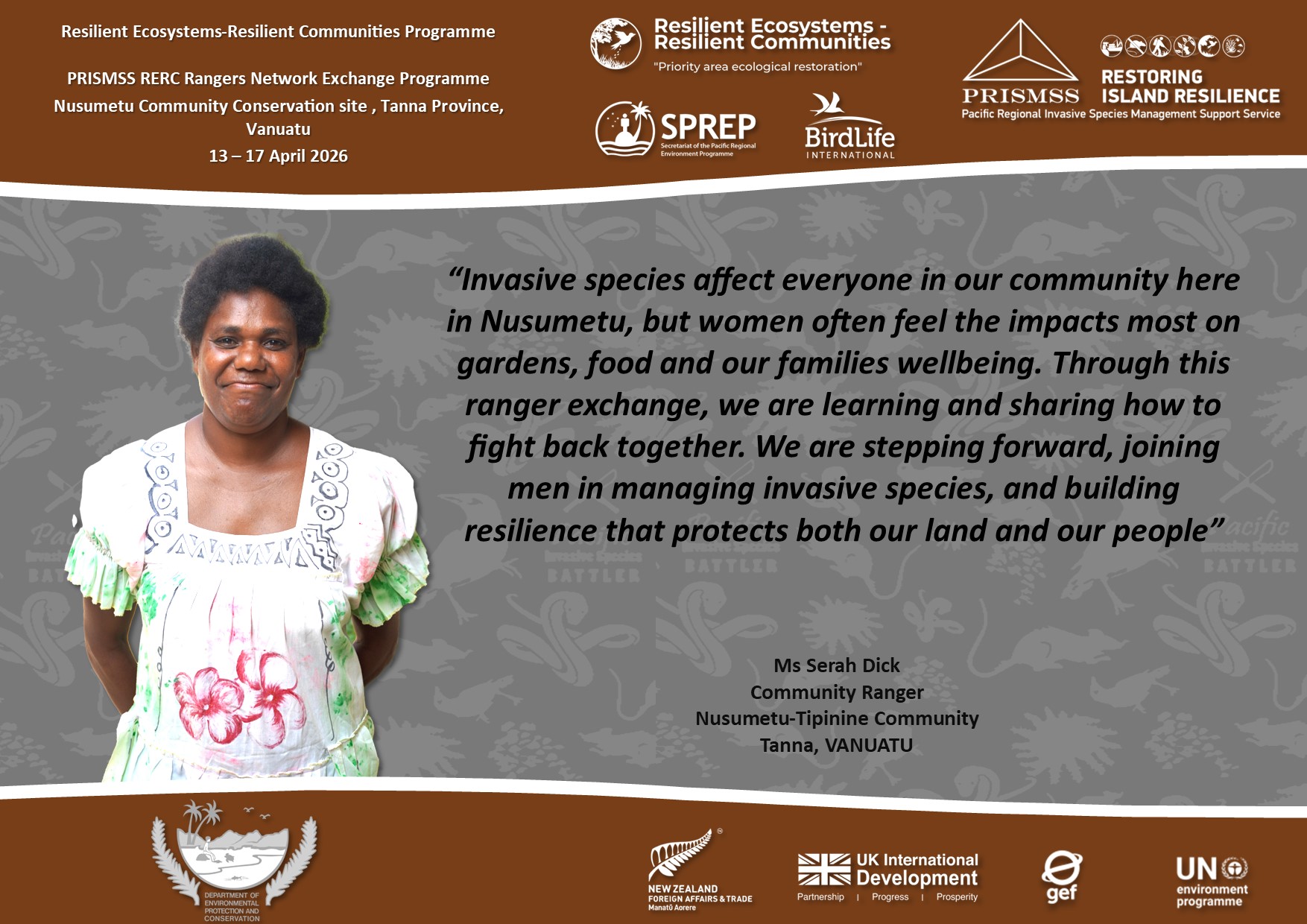
The sessions also deepened understanding of why managing high-value ecological sites is critical, how to prioritize sites for management, which invasive species pose the greatest threats, and how ecosystem structures can be restored.
Importantly, rangers discussed who should be involved emphasising inclusivity and community leadership as the foundation for long-term conservation success. Rangers were informed that the approach to restoration focuses on high-value ecological sites, often home to endangered or endemic species, and involves site-based action to control multiple invasive species and support natural regeneration.
The process begins with site investigation to identify invasive plant communities and areas where removal would have significant impacts. Sites are then classified into framework phases, and management units are established for practical operations. Control of invasive plants is carried out systematically, using manual removal or herbicide applications, followed by monitoring to ensure effectiveness.
SPREP Invasive Species Adviser, Mr David Moverley shared that, “Community involvement is essential, as restoration is a long-term commitment.”
“Every restoration project is a story of resilience, and with local ownership, supported by technical advice and training, the economic, cultural, and environmental benefits are shared by all.”
“SPREP, through the PRISMSS RERC programme, will continue to work closely with our partners and communities to strengthen these efforts."
The exchange programme also helped rangers understand the importance of rat control. Rats can quickly re-enter managed areas, undermining restoration efforts and disrupting ecosystem functions. The programme expanded its scope to include predator control, with BirdLife International sharing expertise on managing rats, feral pigs, and cats.
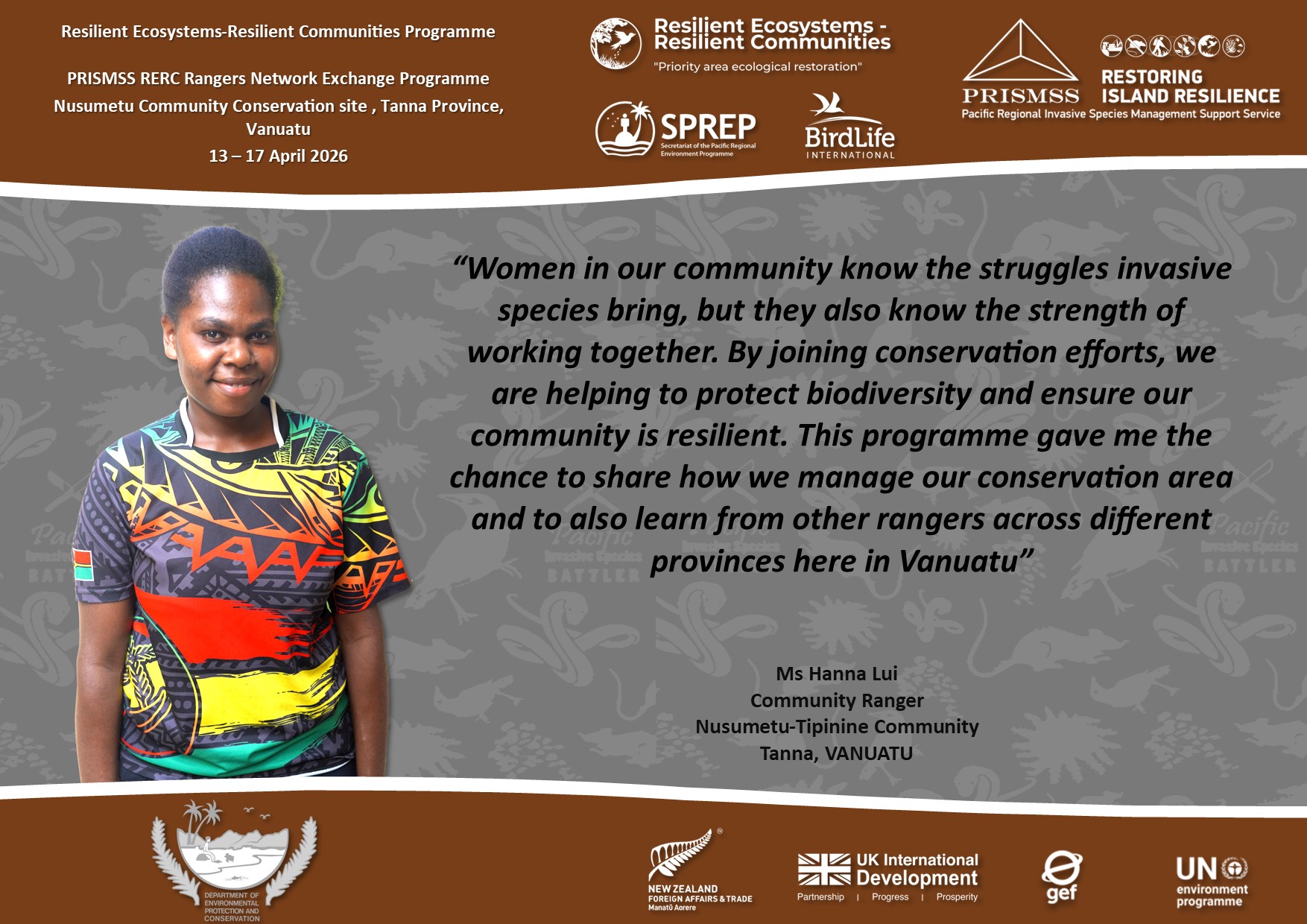
Discussions highlighted conservation priorities across different community areas in Vanuatu, ensuring that strategies were tailored to local realities. Other invasive species such as cats, pigs, and ants also require continuous management due to their mobility and destructive impact on native species and ecosystem structure.
Through site-based training, rangers gained hands-on experience in setting up predator management zones. This practical exercise strengthened their skills and confidence, equipping them to lead invasive species management efforts in their own communities.
Mr Rieky Simieon, a Ranger from the Lake Letes Conservation Area in Gama, Vanuatu shared that, “our forests are the heart of our community and to protect them, we must also manage invasive species that threaten our way of life.”
“By using our traditional knowledge and strong community leadership, we can engage everyone, young and old, to care for our environment and together, we ensure our conservation areas remain resilient”
Mr Richard Del, Community Ranger for the Amal Krabbay Tabu Area, Malekula Central, Malampa reflected that, “in Vanuatu, our strength in managing community conservation areas comes from our culture, respect and the wisdom passed down through generations.”
“Our traditional knowledge, passed down to us by our elders, guides us to care for our land in ways that honor our ancestors and sustain our people and through this rangers network exchange, I was able to learn from fellow rangers across the provinces, sharing experiences, challenges and possible solutions.”
“Bringing these lessons back to my community will strengthen our conservation work, reminding us that while each place is unique, we are connected by the same responsibility to protect our environment.”
Mr Anaclet Philippe Ure, Sanma Province Environment & Extension Officer shared that, “managing invasive species is not just about protecting nature, it is about safeguarding the future of our communities.”
“The ranger exchange allowed us to learn from Numumetu’s experiences, where traditional knowledge and modern practices work hand in hand and we need to acknowledge that invasive species management requires both scientific approaches and respect for community values.”
“Bringing these lessons back to Sanma helps us unite communities across Vanuatu in the shared responsibility of conserving our biodiversity"
Ms Leisongi Manses, a Senior Plant Health Officer with Vanuatu Biosecurity commented that, invasive species threaten the balance of our ecosystems and the livelihoods of our people and biosecurity is not just about science, it is about respect for culture and the wisdom passed down by elders of our communities.”
“This ranger network exchange allowed us to learn innovative ways to manage invasive species, safely and properly, being provided with the right resources and tools and while honoring traditional practices.”
“This combination ensures stronger conservation outcomes and lasting benefits for Vanuatu’s biodiversity."
Rangers also developed structured action plans that identified priority sites, outlined the specific needs and reasons for management, and prioritised invasive species to target. These sites were divided into management units and assigned restoration phases, providing a clear roadmap for action.

By combining traditional knowledge with modern conservation science, and by using the right tools and resources, rangers learned to identify invasive species early, apply practical management strategies, and integrate cultural practices that ensure solutions are accepted and sustainable.
The PRISMSS RERC programme will continue working with DEPC and the Vanuatu Rangers Network to provide essential technical guidance and coordinated support, ensuring the effective implementation of the action plans developed by the rangers.
About PRISMSS: The Pacific Regional Invasive Species Management Support Service (PRISMSS) is a service designed to facilitate the scaling up of operational management of invasive species in the Pacific. PRISMSS brings together experts to provide support within the Pacific region with a focus on protection of indigenous biodiversity and ecosystem function. As a service provider, PRISMSS provides a comprehensive suite of support services in a cohesive, effective, efficient, and accessible manner to Pacific Island countries and territories.
Restoring Island Resilience (RIR): The PRISMSS - Restoring Island Resilience (RIR) is a New Zealand-PRISMSS collaboration project that aims to improve Pacific Island Countries and territories livelihoods and resilience to climate change by reducing the impact of invasive species on natural and agricultural ecosystems through the six PRISMSS programmes.
PRISMSS Powered by: New Zealand Foreign Affairs & Trade, United Kingdom International Development, GEF, United Nations Environment Programme and SPREP.
PRISMSS Partners: Bioeconomy Science Institute NZ, Birdlife International, Earth Sciences New Zealand, New Zealand Department of Conservation, Island Conservation, the Pacific Community and SPREP.
PRISMSS Programmes: Protect Our Islands (POI), Predator Free Pacific (PFP), War on Weeds (WOW), Natural Enemies Natural Solutions (NENS), Resilient Ecosystems Resilient Communities (RERC) and Protect Our Marine Areas (POMA).